
Switzerland
in Western Europe
Europe
 Austria
 France
 Germany
 Italy
Italy Liechtenstein
- Currency and Currency Code:
- Franc - CHF
- Spoken languages:
- German, French, Italian, Romansh
- Local electricity:
- 230 V - 50 Hz (plugs: C, J)
- Mobile phone / cellular frequencies (MHz):
- 900 MHz, 1800 MHz, 3G, 4G
- ISO 2-Letter code:
- CH
- Internet top level domain:
- .ch
- Country phone prefix:
- +41
- Local Time (capital):
- Timezone:
- UTC/GMT offset: hours
Safety Score: 4,0 of 5.0 based on data from 9 authorites. Meaning please reconsider your need to travel to Switzerland.
Travel warnings are updated daily. Source: Travel Warning Switzerland. Last Update: 2024-04-26 08:02:42
Explore Switzerland
Switzerland with its capital Bern is located in Europe (Central Europe, east of France). It covers some 41,278 square kilometers (slightly less than twice the size of New Jersey) with 8,236,300 citizens. German, French, Italian and Romansh are the common languages used in Switzerland (consider regional differences). Austria, France, Germany, Italy and Liechtenstein are bordering countries.
Switzerland is a landlocked country in Central Europe. The climate is temperate, but varies with altitude. Switzerland has cold rainy/snowy winters and cool to warm summers with occasional showers. Switzerland is a peaceful, prosperous, and stable modern market economy with low unemployment, a highly skilled labor force, and a per capita GDP larger than that of the big Western European economies. Major international airports are in Zurich, Geneva and Basel, with smaller airports in Lugano and Berne. Common tourist destinations within Switzerland are easily reachable by car, e.g. Geneva from central eastern France, and Zurich from southern Germany. The Swiss will spoil you with fantastic transportation - swift, disturbingly punctual trains, clean buses, and a half dozen different kinds of mountain transport systems, integrated into a coherent system. Switzerland is famous for a few key goods: watches, chocolate, cheese, and Swiss Army knives (Note that these must be packed in hold luggage). Swiss employment law bans working on Sundays, so shops generally stay closed. Switzerland is not surprisingly one of the safest countries in Europe, but anywhere that attracts Rolex-wearing bankers and crowds of distracted tourists will also bring out a few pickpockets. Obviously, keep an eye on belongings, especially in the midst of summer crowds.
Popular Destinations in Switzerland
Administrative regions of Switzerland
- Appenzell Innerrhoden
- Basel-Landschaft
- Canton Ticino
- Canton du Valais
- Canton of Aargau
- Canton of Appenzell Ausserrhoden
- Canton of Basel-City
- Canton of Bern
- Canton of Fribourg
- Canton of Geneva
- Canton of Glarus
- Canton of Jura
- Canton of Lucerne
- Canton of Neuchatel
- Canton of Nidwalden
- Canton of Obwalden
- Canton of Schaffhausen
- Canton of Schwyz
- Canton of Solothurn
- Canton of St Gallen
- Canton of Uri
- Canton of Vaud
- Canton of Zug
- Canton of Zurich
- Kanton Graubunden
- Thurgau
About the country
Website: Switzerland Tourism
Toedistrasse 7
P.O. Box 695
8027 Zurich
Phone: +41 1 288 1111
Fax: +41 1 288 1205
Mail: postoffice@switzerlandtourism.ch
The topography is mostly mountains (Alps in south, Jura in northwest) with a central plateau of rolling hills, plains, and large lakes. The average density of population is about 200 per km². The climate in Switzerland can be described as temperate, but varying with altitudecold, cloudy, rainy/snowy winters, cool to warm, cloudy, humid summers with occasional showers. Potential natural disasters are avalanches, landslides flash floods
To reach someone Switzerland dial +41 prior to a number. The local cellular networks are operated on 900 MHz, 1800 MHz, 3G, 4G. Websites typically end with the top level domain ".ch". If you want to bring electric appliances (e.g. battery chaarger), keep in min the local 230 V - 50 Hz (plugs: C, J). The sign for the locally used currency Franc is CHF.
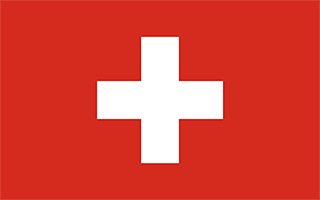
Red square with a bold, equilateral white cross in the center that does not extend to the edges of the flag; various medieval legends purport to describe the origin of the flag; a white cross used as identification for troops of the Swiss Confederation is first attested at the Battle of Laupen (1339).
The Swiss Confederation was founded in 1291 as a defensive alliance among three cantons. In succeeding years, other localities joined the original three. The Swiss Confederation secured its independence from the Holy Roman Empire in 1499. A constitution of 1848, subsequently modified in 1874, replaced the confederation with a centralized federal government. Switzerland's sovereignty and neutrality have long been honored by the major European powers, and the country was not involved in either of the two world wars. The political and economic integration of Europe over the past half century, as well as Switzerland's role in many UN and international organizations, has strengthened Switzerland's ties with its neighbors. However, the country did not officially become a UN member until 2002. Switzerland remains active in many UN and international organizations but retains a strong commitment to neutrality.
Geography
| Area | ||
|---|---|---|
| Total (World Rank: 136) | 41,277 | sq km |
| Land (World Rank: 133) | 39,997 | sq km |
| Water (World Rank: 104) | 1,280 | sq km |
| Forest (World Rank: 60) | 27.90 | % |
| Comparative | slightly less than twice the size of New Jersey | |
| Landborder | ||
| 1770 | ||
| Elevation | ||
| Lowest point (World Rank: 18) | 195 | m |
| Highest point (World Rank: 33) | 4,634 | m |
| Agricultural land | ||
| Total (World Rank: 109) | 38.70 | % |
| Arable (World Rank: 107) | 10.20 | % |
| Permanent crops (World Rank: 140) | 0.60 | % |
| Permanent pastures (World Rank: 60) | 27.90 | % |
| Irrigated land (World Rank: 111) | 630 | sq km |
| Map reference | ||
| Europe | ||
| Environment | ||
| Issues |
| |
| Agreement party |
| |
| Agreement signed | Law of the Sea | |
| Hazzards |
| |
| Location | ||
| Central Europe, east of France, north of Italy | ||
| Climate | ||
| temperate, but varies with altitude; cold, cloudy, rainy/snowy winters; cool to warm, cloudy, humid summers with occasional showers | ||
| Terrain | ||
| mostly mountains (Alps in south, Jura in northwest) with a central plateau of rolling hills, plains, and large lakes | ||
People
| Population | ||
|---|---|---|
| Total (World Rank: 98) | 8,236,300 | |
| Deathrate (World Rank: 82) | 0.83 | % |
| Birthrate (World Rank: 184) | 1.05 | % |
| Growthrate (World Rank: 143) | 0.69 | % |
| Migration rate (World Rank: 25) | 0.47 | % |
| Fertility rate (World Rank: 185) | 1.56 | % |
| Median age | ||
| Male (World Rank: 21) | 41.40 | |
| Female (World Rank: 32) | 43.40 | |
| Age structure | ||
| 0 14 male (World Rank: 114) | 642,814 | |
| 0 14 female (World Rank: 114) | 605,689 | |
| 15 24 male (World Rank: 113) | 458,044 | |
| 15 24 female (World Rank: 113) | 438,373 | |
| 25 54 male (World Rank: 93) | 1,784,050 | |
| 25 54 female (World Rank: 92) | 1,774,490 | |
| 55 64 male (World Rank: 68) | 519,709 | |
| 55 64 female (World Rank: 73) | 518,421 | |
| 65 x male (World Rank: 56) | 658,673 | |
| 65 x female (World Rank: 57) | 836,035 | |
| Health | ||
| Infant mortality rate (World Rank: 195) | 0.36 | % |
| Life expectancy total (World Rank: 9) | 83 | years |
| Life expectancy female (World Rank: 13) | 85 | years |
| Life expectancy male (World Rank: 10) | 80 | years |
| Physicians per 1000 (World Rank: 12) | 4.11 | |
| Hospital bed per 1000 (World Rank: 36) | 5.00 | |
| Sanitation access total (World Rank: 20) | 99.90 | % |
| Obesity adult (World Rank: 112) | 19.50 | % |
| Drinking water access (World Rank: 12) | 100.00 | % |
Energy
| Electricity | ||
|---|---|---|
| Production (World Rank: 44) | 64,060,000,000 | kWh |
| Consumption (World Rank: 43) | 58,450,000,000 | kWh |
| Export (World Rank: 5) | 30,170,000,000 | kWh |
| Import (World Rank: 4) | 34,100,000,000 | kWh |
| Source fossil (World Rank: 207) | 2.90 | % |
| Source nuclear (World Rank: 94) | 17.00 | % |
| Source renew (World Rank: 65) | 11.10 | % |
| Crude oil | ||
| Exports (World Rank: 77) | 319 | bbl / day |
| Imports (World Rank: 54) | 58,400 | bbl / day |
| Refined products | ||
| Production (World Rank: 78) | 63,400 | bbl / day |
| Consumption (World Rank: 53) | 217,400 | bbl / day |
| Export (World Rank: 83) | 8,894 | bbl / day |
| Import (World Rank: 37) | 166,300 | bbl / day |
| Natural gas | ||
| Production (World Rank: 90) | 25,000,000 | m³ |
| Consumption (World Rank: 66) | 4,639,000,000 | m³ |
| Import (World Rank: 41) | 0 | m³ |
| Carbon footprint | ||
| 45000000 | ||
Nation
| Budget | ||
|---|---|---|
| Education (World Rank: 61) | 5 | % of GDP |
| Military (World Rank: 132) | 1 | % of GDP |
| Health (World Rank: 7) | 12 | % of GDP |
| Surplus (World Rank: 30) | 1 | % of GDP |
| National symbol | ||
| Swiss cross | ||
| National colours | ||
| white | ||
| Adjective | ||
| Swiss | ||
| Noun | ||
| Swiss (singular and plural) | ||
| Background | ||
| The Swiss Confederation was founded in 1291 as a defensive alliance among three cantons. In succeeding years, other localities joined the original three. The Swiss Confederation secured its independence from the Holy Roman Empire in 1499. A constitution of 1848, subsequently modified in 1874, replaced the confederation with a centralized federal government. Switzerland's sovereignty and neutrality have long been honored by the major European powers, and the country was not involved in either of the two world wars. The political and economic integration of Europe over the past half century, as well as Switzerland's role in many UN and international organizations, has strengthened Switzerland's ties with its neighbors. However, the country did not officially become a UN member until 2002. Switzerland remains active in many UN and international organizations but retains a strong commitment to neutrality. | ||
| Flag description | ||
| red square with a bold, equilateral white cross in the center that does not extend to the edges of the flag; various medieval legends purport to describe the origin of the flag; a white cross used as identification for troops of the Swiss Confederation is first attested at the Battle of Laupen (1339) | ||
Economy
| Gdp | ||
|---|---|---|
| Purchasing power parity (World Rank: 38) | 502,700,000,000 | USD |
| Real growth rate (World Rank: 160) | 1.40 | % |
| Per capita purchasing power parity (World Rank: 16) | 60,400 | USD |
| Source agriculture (World Rank: 205) | 0.70 | % |
| Source industry (World Rank: 114) | 25.50 | % |
| Source service (World Rank: 50) | 73.80 | % |
| Labourforce | ||
| Total (World Rank: 80) | 5,119,000 | |
| In poverty (World Rank: 160) | 6.60 | % |
| Products | ||
| Industries |
| |
| Agriculture |
| |
| Exports |
| |
| Imports |
| |
Communication
| Phone | ||
|---|---|---|
| Landline total (World Rank: 36) | 4,029,000 | |
| Landline per 100 (World Rank: 20) | 49.00 | |
| Mobile per 100 (World Rank: 42) | 138.00 | |
| Assessment | 0 | |
| Internet | ||
| Users (World Rank: 59) | 7,312,740 | |
| Population (World Rank: 26) | 89.40 | % |
Transport
| Air | ||
|---|---|---|
| Airports paved (World Rank: 48) | 40.00 | |
| Airports unpaved (World Rank: 97) | 23.00 | |
| Heliports (World Rank: 60) | 2.00 | |
| Rail | ||
| Total length (World Rank: 34) | 5,652 | |
| Road | ||
| Total length (World Rank: 66) | 71,464 | |
| Paved length (World Rank: 38) | 71,464 | |
| Water | ||
| Total length (World Rank: 59) | 1,292 | |
This is a list of famous places in this country in alphabetical order.
 Aarau
Aarau- Adliswil
- Affoltern am Albis
- Aigle
- Altdorf
- Appenzell
- Arbon
- Arlesheim
- Arth
- Bad Zurzach
- Baden
- Basel
- Bellinzona
- Bern
- Biel/Bienne
- Birmensdorf
- Bremgarten
- Brig
- Brugg
- Buchs
- Bulach
- Burgdorf
- Carouge
- Chur
- Delemont
- Dietikon
- Domat
- Dubendorf
- Einsiedeln
- Frauenfeld
- Fribourg
- Geneva
- Glarus
- Herisau
- Hinwil
- Horgen
- Interlaken
- Kilchberg
- Kloten
- Koniz
- Kreuzlingen
- Kriens
- Kuesnacht
- Kussnacht
- La Chaux-de-Fonds
- Lachen
- Laufen
- Lausanne
- Lenzburg
- Leuk
- Liestal
- Locarno
- Lugano
- Luzern
- Meilen
- Montreux
- Munchwilen
- Muri
- Neuchatel
- Ober Urdorf
- Oetwil am See
- Olten
- Pfaffikon
- Porrentruy
- Rapperswil
- Regensdorf
- Renens
- Rheinfelden
- Romanshorn
- Rueti
- Ruschlikon
- Saint-Maurice
- Sankt Gallen
- Sarnen
- Schaffhausen
- Schlieren
- Schwyz
- Sissach
- Sitten
- Solothurn
- Stans
- Suhr
- Sursee
- Thalwil
- Thun
- Uster
- Vernier
- Vevey
- Visp
- Wadenswil
- Wallisellen
- Weinfelden
- Wettingen
- Wetzikon
- Willisau
- Winterthur
- Yverdon-les-Bains
- Zofingen
- Zug
- Zurich