Austria
in Western Europe
Europe
 Czechia
 Germany
 Hungary
 Italy
Italy Liechtenstein
 Slovakia
 Slovenia
 Switzerland
- Currency and Currency Code:
- Euro - EUR
- Spoken languages:
- German, Croatian, Hungarian, Slovenian
- Local electricity:
- 230 V - 50 Hz (plugs: C, F)
- Mobile phone / cellular frequencies (MHz):
- 900 MHz, 1800 MHz, 3G, 4G
- ISO 2-Letter code:
- AT
- Internet top level domain:
- .at
- Country phone prefix:
- +43
- Local Time (capital):
- Timezone:
- UTC/GMT offset: hours
Safety Score: 3,0 of 5.0 based on data from 9 authorites. Meaning we advice caution when travelling to Austria.
Travel warnings are updated daily. Source: Travel Warning Austria. Last Update: 2024-04-26 08:02:42
Explore Austria
Austria with its capital Vienna is located in Europe (Central Europe, north of Italy and Slovenia). It covers some 83,872 square kilometers (about the size of South Carolina) with 8,754,410 citizens. German, Croatian, Hungarian and Slovenian are the common languages used in Austria (consider regional differences). Czechia, Germany, Hungary, Italy, Liechtenstein, Slovakia, Slovenia and Switzerland are bordering countries.
Austria is a land-locked alpine country in Central Europe. Austria, along with neighboring Switzerland, is the winter sports capital of Europe. However, it is just as popular for summer tourists who visit its historic cities and villages and hike in the magnificent scenery of the alps. The diverse mix of landscapes is packed into a relatively small area of size. Glaciers, meadows, alpine valleys, wooded foothills, gently rolling farmland, vineyards, river gorges, plains and even semi-arid steppes can be found in Austria. Austria is a federation. Each of its nine federal states has a unique and distinct culture. Being at Europe's crossroads, their culture is influenced from many sides.
Popular Destinations in Austria
Administrative regions of Austria
About the country
Website: Austria Tourism
Urlaubsinformation Österreich
Margaretenstrasse 1
A-1040 Wien
Austria
Phone: +43 1 588 660
Fax: +43 1 588 6620
Mail: urlaub@austria.info
The landscape is mostly mountains (Alps) in the west and south and mostly flat or gently sloping along the eastern and northern margins. The average density of population is about 104 per km². The climate in Austria can be described as temperatecontinental, cloudy, cold winters with frequent rain and some snow in lowlands and snow in mountains, moderate summers with occasional showers. Potential threats by nature are avalanches, earthquakes and landslides.
To reach someone Austria dial +43 prior to a number. The local cellular networks are operated on 900 MHz, 1800 MHz, 3G, 4G. Websites typically end with the top level domain ".at". If you want to bring electric appliances (e.g. battery chaarger), keep in min the local 230 V - 50 Hz (plugs: C, F). The sign for the locally used currency Euro is EUR.
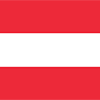
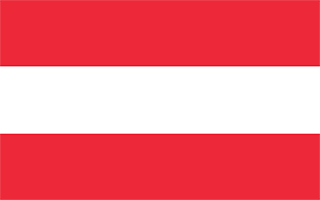
Three equal horizontal bands of red (top), white, and red; the flag design is certainly one of the oldest - if not the oldest - national banners in the world; according to tradition, in 1191, following a fierce battle in the Third Crusade, Duke Leopold V of Austria's white tunic became completely blood-spattered; upon removal of his wide belt or sash, a white band was revealed; the red-white-red color combination was subsequently adopted as his banner.
Once the center of power for the large Austro-Hungarian Empire, Austria was reduced to a small republic after its defeat in World War I. Following annexation by Nazi Germany in 1938 and subsequent occupation by the victorious Allies in 1945, Austria's status remained unclear for a decade. A State Treaty signed in 1955 ended the occupation, recognized Austria's independence, and forbade unification with Germany. A constitutional law that same year declared the country's "perpetual neutrality" as a condition for Soviet military withdrawal. The Soviet Union's collapse in 1991 and Austria's entry into the EU in 1995 have altered the meaning of this neutrality. A prosperous, democratic country, Austria entered the EU Economic and Monetary Union in 1999.
Geography
| Area | ||
|---|---|---|
| Total (World Rank: 115) | 83,871 | sq km |
| Land (World Rank: 114) | 82,445 | sq km |
| Water (World Rank: 100) | 1,426 | sq km |
| Forest (World Rank: 82) | 21.10 | % |
| Comparative | about the size of South Carolina; slightly more than two-thirds the size of Pennsylvania | |
| Landborder | ||
| 2524 | ||
| Elevation | ||
| Lowest point (World Rank: 23) | 115 | m |
| Highest point (World Rank: 47) | 3,798 | m |
| Agricultural land | ||
| Total (World Rank: 111) | 38.40 | % |
| Arable (World Rank: 71) | 16.50 | % |
| Permanent crops (World Rank: 136) | 0.80 | % |
| Permanent pastures (World Rank: 82) | 21.10 | % |
| Irrigated land (World Rank: 88) | 1,170 | sq km |
| Map reference | ||
| Europe | ||
| Environment | ||
| Issues |
| |
| Agreement party |
| |
| Hazzards |
| |
| Location | ||
| Central Europe, north of Italy and Slovenia | ||
| Climate | ||
| temperate; continental, cloudy; cold winters with frequent rain and some snow in lowlands and snow in mountains; moderate summers with occasional showers | ||
| Terrain | ||
| mostly mountains (Alps) in the west and south; mostly flat or gently sloping along the eastern and northern margins | ||
People
| Population | ||
|---|---|---|
| Total (World Rank: 95) | 8,754,410 | |
| Deathrate (World Rank: 48) | 0.96 | % |
| Birthrate (World Rank: 198) | 0.95 | % |
| Growthrate (World Rank: 156) | 0.47 | % |
| Migration rate (World Rank: 24) | 0.48 | % |
| Fertility rate (World Rank: 197) | 1.47 | % |
| Median age | ||
| Male (World Rank: 14) | 42.80 | |
| Female (World Rank: 14) | 45.10 | |
| Age structure | ||
| 0 14 male (World Rank: 115) | 628,205 | |
| 0 14 female (World Rank: 115) | 598,519 | |
| 15 24 male (World Rank: 109) | 494,016 | |
| 15 24 female (World Rank: 111) | 475,500 | |
| 25 54 male (World Rank: 90) | 1,856,530 | |
| 25 54 female (World Rank: 90) | 1,856,940 | |
| 55 64 male (World Rank: 64) | 574,570 | |
| 55 64 female (World Rank: 65) | 584,022 | |
| 65 x male (World Rank: 52) | 731,126 | |
| 65 x female (World Rank: 52) | 954,986 | |
| Health | ||
| Infant mortality rate (World Rank: 204) | 0.34 | % |
| Life expectancy total (World Rank: 23) | 82 | years |
| Life expectancy female (World Rank: 22) | 84 | years |
| Life expectancy male (World Rank: 24) | 79 | years |
| Physicians per 1000 (World Rank: 6) | 5.15 | |
| Hospital bed per 1000 (World Rank: 10) | 7.60 | |
| Sanitation access total (World Rank: 9) | 100.00 | % |
| Obesity adult (World Rank: 105) | 20.10 | % |
| Drinking water access (World Rank: 32) | 100.00 | % |
Energy
| Electricity | ||
|---|---|---|
| Production (World Rank: 49) | 56,050,000,000 | kWh |
| Consumption (World Rank: 41) | 62,780,000,000 | kWh |
| Export (World Rank: 9) | 19,190,000,000 | kWh |
| Import (World Rank: 6) | 26,340,000,000 | kWh |
| Source fossil (World Rank: 193) | 22.20 | % |
| Source nuclear (World Rank: 61) | 33.20 | % |
| Source renew (World Rank: 22) | 24.30 | % |
| Crude oil | ||
| Production (World Rank: 74) | 15,160 | bbl / day |
| Imports (World Rank: 36) | 148,400 | bbl / day |
| Proved reserves (World Rank: 80) | 43,000,000 | bbl |
| Refined products | ||
| Production (World Rank: 51) | 188,000 | bbl / day |
| Consumption (World Rank: 47) | 267,500 | bbl / day |
| Export (World Rank: 52) | 49,230 | bbl / day |
| Import (World Rank: 47) | 132,100 | bbl / day |
| Natural gas | ||
| Production (World Rank: 62) | 1,263,000,000 | m³ |
| Consumption (World Rank: 50) | 12,120,000,000 | m³ |
| Export (World Rank: 29) | 5,407,000,000 | m³ |
| Import (World Rank: 51) | 0 | m³ |
| Carbon footprint | ||
| 78900000 | ||
Nation
| Budget | ||
|---|---|---|
| Education (World Rank: 43) | 6 | % of GDP |
| Military (World Rank: 133) | 1 | % of GDP |
| Health (World Rank: 11) | 11 | % of GDP |
| Surplus (World Rank: 72) | -2 | % of GDP |
| National symbol | ||
| golden eagle | ||
| National colours | ||
| white | ||
| Adjective | ||
| Austrian | ||
| Noun | ||
| Austrian(s) | ||
| Background | ||
| Once the center of power for the large Austro-Hungarian Empire, Austria was reduced to a small republic after its defeat in World War I. Following annexation by Nazi Germany in 1938 and subsequent occupation by the victorious Allies in 1945, Austria's status remained unclear for a decade. A State Treaty signed in 1955 ended the occupation, recognized Austria's independence, and forbade unification with Germany. A constitutional law that same year declared the country's "perpetual neutrality" as a condition for Soviet military withdrawal. The Soviet Union's collapse in 1991 and Austria's entry into the EU in 1995 have altered the meaning of this neutrality. A prosperous, democratic country, Austria entered the EU Economic and Monetary Union in 1999. | ||
| Flag description | ||
| three equal horizontal bands of red (top), white, and red; the flag design is certainly one of the oldest - if not the oldest - national banners in the world; according to tradition, in 1191, following a fierce battle in the Third Crusade, Duke Leopold V of Austria's white tunic became completely blood-spattered; upon removal of his wide belt or sash, a white band was revealed; the red-white-red color combination was subsequently adopted as his banner | ||
Economy
| Gdp | ||
|---|---|---|
| Purchasing power parity (World Rank: 46) | 417,100,000,000 | USD |
| Real growth rate (World Rank: 154) | 1.50 | % |
| Per capita purchasing power parity (World Rank: 32) | 47,700 | USD |
| Source agriculture (World Rank: 191) | 1.30 | % |
| Source industry (World Rank: 93) | 28.10 | % |
| Source service (World Rank: 61) | 70.60 | % |
| Labourforce | ||
| Total (World Rank: 92) | 3,944,000 | |
| In poverty (World Rank: 164) | 4.00 | % |
| Products | ||
| Industries |
| |
| Agriculture |
| |
| Exports |
| |
| Imports |
| |
Communication
| Phone | ||
|---|---|---|
| Landline total (World Rank: 40) | 3,567,200 | |
| Landline per 100 (World Rank: 36) | 41.00 | |
| Mobile per 100 (World Rank: 16) | 164.00 | |
| Assessment | 0 | |
| Internet | ||
| Users (World Rank: 58) | 7,346,060 | |
| Population (World Rank: 35) | 84.30 | % |
Transport
| Air | ||
|---|---|---|
| Airports paved (World Rank: 70) | 24.00 | |
| Airports unpaved (World Rank: 89) | 28.00 | |
| Heliports (World Rank: 82) | 1.00 | |
| Rail | ||
| Total length (World Rank: 33) | 5,800 | |
| Road | ||
| Total length (World Rank: 38) | 138,696 | |
| Paved length (World Rank: 22) | 138,696 | |
| Water | ||
| Total length (World Rank: 91) | 358 | |
This is a list of famous places in this country in alphabetical order.
 Amstetten
- Anif
- Arnoldstein
- Attnang-Puchheim
- Bad Gastein
- Bad Hofgastein
- Bad Ischl
- Bad Voslau
- Baden
- Bischofshofen
- Bludenz
- Braunau am Inn
- Bregenz
- Bruck an der Mur
- Deutsch-Wagram
- Deutschlandsberg
- Dornbirn
- Eisenstadt
- Feldkirch
- Feldkirchen in Karnten
- Fieberbrunn
- Finkenstein am Faaker See
- Fuerstenfeld
- Gmunden
- Gotzis
- Graz
- Gross-Enzersdorf
- Hall in Tirol
- Hallein
- Hohenems
- Hollabrunn
- Imst
- Innsbruck
- Jenbach
- Jennersdorf
- Judenburg
- Kapfenberg
- Kitzbuhel
- Klagenfurt am Woerthersee
- Klosterneuburg
- Korneuburg
- Krems an der Donau
- Kufstein
- Landeck
- Leibnitz
- Leoben
- Leonding
- Lienz
- Liezen
- Linz
- Lustenau
- Matrei in Osttirol
- Mattersburg
- Mayrhofen
- Melk
- Mittersill
- Modling
- Muerzzuschlag
- Neusiedl am See
- Oberwart
- Perchtoldsdorf
- Perg
- Poysdorf
- Purkersdorf
- Rankweil
- Reutte
- Rottenmann
- Saalfelden am Steinernen Meer
- Salzburg
- Sankt Gilgen
- Sankt Johann im Pongau
- Sankt Poelten
- Sankt Veit an der Glan
- Schladming
- Schwaz
- Schwechat
- Seeboden
- Seefeld in Tirol
- Seekirchen am Wallersee
- Soelden
- Spittal an der Drau
- Steyr
- Stockerau
- Strasshof an der Nordbahn
- Strobl
- Tamsweg
- Telfs
- Ternitz
- Vienna
- Villach
- Vocklabruck
- Voelkermarkt
- Waidhofen an der Ybbs
- Wattens
- Weiz
- Wels
- Wiener Neustadt
- Wolfsberg
- Worgl
- Zell am See