Sweden
in Northern Europe
Europe
 Finland
 Norway
- Currency and Currency Code:
- Krona - SEK
- Spoken languages:
- Swedish, Northern Sami, Finnish
- Local electricity:
- 230 V - 50 Hz (plugs: C, F)
- Mobile phone / cellular frequencies (MHz):
- 900 MHz, 1800 MHz, 3G, 4G
- ISO 2-Letter code:
- SE
- Internet top level domain:
- .se
- Country phone prefix:
- +46
- Local Time (capital):
- Timezone:
- UTC/GMT offset: hours
Safety Score: 3,5 of 5.0 based on data from 9 authorites. Meaning please reconsider your need to travel to Sweden.
Travel warnings are updated daily. Source: Travel Warning Sweden. Last Update: 2024-04-26 08:02:42
Explore Sweden
Sweden with its capital Stockholm is located in Europe (Northern Europe, bordering the Baltic Sea). It covers some 450,296 square kilometers (almost three times the size of Georgia) with a population of 9,960,490. Swedish, Northern Sami and Finnish are some of the languages spoken by the majority in Sweden (consider regional differences). Did you know that is sharing borders with Finland and Norway.
Sweden is the largest of the Nordic countries in Northern Europe, with a population of about 9.3 million. Sweden has a strong tradition of being an open, yet discreet country. Citizens sometimes appear to be quite reserved at first, but once they get to know who they are dealing with, they'll be as warm and friendly as you'd wish. Sweden is great for outdoor life - skiing, skating, hiking, canoeing, cycling and berry-picking depending of season. Stockholm and Gothenburg have great nightlife and shopping opportunities. Most cities have well-preserved preindustrial architecture. Sceneries of nature, less populated than most of Europe. Ice and snow during winter.
Popular Destinations in Sweden
Administrative regions of Sweden
- Blekinge
- Dalarna
- Gaevleborgs laen
- Gotland
- Halland
- Jaemtlands laen
- Joenkoepings laen
- Kalmar
- Kronoberg
- Norrbotten
- OErebro laen
- OEstergoetlands laen
- Skane County
- Soedermanlands laen
- Stockholm
- Uppsala
- Vaermlands laen
- Vaesterbottens laen
- Vaesternorrlands laen
- Vaestmanlands laen
- Vastra GOtaland County
About the country
The terrain is mostly flat or gently rolling lowlands having mountains in west. The average density of population is about 22 per km². The climate in Sweden can be described as temperate in south with cold, cloudy winters and cool, partly cloudy summers with subarctic in north. Possible natural disasters include ice floes in the surrounding waters, especially in the Gulf of Bothnia, can interfere with maritime traffic.
To reach someone Sweden dial +46 prior to a number. The local cellular networks are operated on 900 MHz, 1800 MHz, 3G, 4G. Websites typically end with the top level domain ".se". If you want to bring electric appliances (e.g. battery chaarger), keep in min the local 230 V - 50 Hz (plugs: C, F). The sign for the locally used currency Krona is SEK.
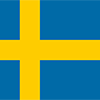
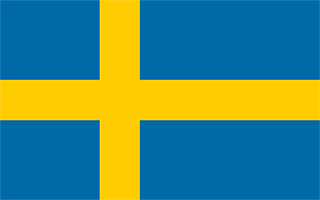
Blue with a golden yellow cross extending to the edges of the flag; the vertical part of the cross is shifted to the hoist side in the style of the Dannebrog (Danish flag); the colors reflect those of the Swedish coat of arms - three gold crowns on a blue field.
A military power during the 17th century, Sweden has not participated in any war for two centuries. An armed neutrality was preserved in both world wars. Sweden's long-successful economic formula of a capitalist system intermixed with substantial welfare elements was challenged in the 1990s by high unemployment and in 2000-02 and 2009 by the global economic downturns, but fiscal discipline over the past several years has allowed the country to weather economic vagaries. Sweden joined the EU in 1995, but the public rejected the introduction of the euro in a 2003 referendum.
Geography
| Area | ||
|---|---|---|
| Total (World Rank: 57) | 450,295 | sq km |
| Land (World Rank: 58) | 410,335 | sq km |
| Water (World Rank: 17) | 39,960 | sq km |
| Forest (World Rank: 186) | 1.10 | % |
| Comparative | almost three times the size of Georgia; slightly larger than California | |
| Coastline | ||
| 3218 | ||
| Landborder | ||
| 2211 | ||
| Elevation | ||
| Lowest point (World Rank: 44) | -2 | m |
| Highest point (World Rank: 118) | 2,111 | m |
| Agricultural land | ||
| Total (World Rank: 203) | 7.50 | % |
| Arable (World Rank: 141) | 6.40 | % |
| Permanent pastures (World Rank: 186) | 1.10 | % |
| Irrigated land (World Rank: 81) | 1,640 | sq km |
| Map reference | ||
| Europe | ||
| Environment | ||
| Issues |
| |
| Agreement party |
| |
| Hazzards | ice floes in the surrounding waters, especially in the Gulf of Bothnia, can interfere with maritime traffic | |
| Location | ||
| Northern Europe, bordering the Baltic Sea, Gulf of Bothnia, Kattegat, and Skagerrak, between Finland and Norway | ||
| Climate | ||
| temperate in south with cold, cloudy winters and cool, partly cloudy summers; subarctic in north | ||
| Terrain | ||
| mostly flat or gently rolling lowlands; mountains in west | ||
People
| Population | ||
|---|---|---|
| Total (World Rank: 91) | 9,960,490 | |
| Deathrate (World Rank: 54) | 0.94 | % |
| Birthrate (World Rank: 162) | 1.21 | % |
| Growthrate (World Rank: 128) | 0.81 | % |
| Migration rate (World Rank: 22) | 0.53 | % |
| Fertility rate (World Rank: 138) | 1.88 | % |
| Median age | ||
| Male (World Rank: 34) | 40.20 | |
| Female (World Rank: 46) | 42.20 | |
| Age structure | ||
| 0 14 male (World Rank: 100) | 892,462 | |
| 0 14 female (World Rank: 100) | 843,375 | |
| 15 24 male (World Rank: 99) | 581,025 | |
| 15 24 female (World Rank: 102) | 545,971 | |
| 25 54 male (World Rank: 86) | 1,993,590 | |
| 25 54 female (World Rank: 87) | 1,933,080 | |
| 55 64 male (World Rank: 63) | 578,942 | |
| 55 64 female (World Rank: 66) | 574,479 | |
| 65 x male (World Rank: 42) | 931,593 | |
| 65 x female (World Rank: 49) | 1,085,970 | |
| Health | ||
| Infant mortality rate (World Rank: 214) | 0.26 | % |
| Life expectancy total (World Rank: 16) | 82 | years |
| Life expectancy female (World Rank: 25) | 84 | years |
| Life expectancy male (World Rank: 11) | 80 | years |
| Physicians per 1000 (World Rank: 13) | 4.11 | |
| Hospital bed per 1000 (World Rank: 87) | 2.54 | |
| Sanitation access total (World Rank: 26) | 99.30 | % |
| Obesity adult (World Rank: 97) | 20.60 | % |
| Drinking water access (World Rank: 35) | 100.00 | % |
Energy
| Electricity | ||
|---|---|---|
| Production (World Rank: 24) | 154,300,000,000 | kWh |
| Consumption (World Rank: 29) | 125,400,000,000 | kWh |
| Export (World Rank: 6) | 26,020,000,000 | kWh |
| Import (World Rank: 16) | 14,290,000,000 | kWh |
| Source fossil (World Rank: 203) | 6.30 | % |
| Source nuclear (World Rank: 76) | 24.30 | % |
| Source renew (World Rank: 13) | 30.00 | % |
| Crude oil | ||
| Imports (World Rank: 24) | 393,900 | bbl / day |
| Refined products | ||
| Production (World Rank: 37) | 418,700 | bbl / day |
| Consumption (World Rank: 41) | 320,200 | bbl / day |
| Export (World Rank: 24) | 336,300 | bbl / day |
| Import (World Rank: 28) | 220,300 | bbl / day |
| Natural gas | ||
| Consumption (World Rank: 93) | 1,250,000,000 | m³ |
| Import (World Rank: 34) | 0 | m³ |
| Carbon footprint | ||
| 62000000 | ||
Nation
| Budget | ||
|---|---|---|
| Education (World Rank: 11) | 8 | % of GDP |
| Military (World Rank: 110) | 1 | % of GDP |
| Health (World Rank: 6) | 12 | % of GDP |
| Surplus (World Rank: 27) | 1 | % of GDP |
| National symbol | ||
| three crowns | ||
| National colours | ||
| yellow | ||
| Adjective | ||
| Swedish | ||
| Noun | ||
| Swede(s) | ||
| Background | ||
| A military power during the 17th century, Sweden has not participated in any war for two centuries. An armed neutrality was preserved in both world wars. Sweden's long-successful economic formula of a capitalist system intermixed with substantial welfare elements was challenged in the 1990s by high unemployment and in 2000-02 and 2009 by the global economic downturns, but fiscal discipline over the past several years has allowed the country to weather economic vagaries. Sweden joined the EU in 1995, but the public rejected the introduction of the euro in a 2003 referendum. | ||
| Flag description | ||
| blue with a golden yellow cross extending to the edges of the flag; the vertical part of the cross is shifted to the hoist side in the style of the Dannebrog (Danish flag); the colors reflect those of the Swedish coat of arms - three gold crowns on a blue field | ||
Economy
| Gdp | ||
|---|---|---|
| Purchasing power parity (World Rank: 39) | 497,400,000,000 | USD |
| Real growth rate (World Rank: 87) | 3.20 | % |
| Per capita purchasing power parity (World Rank: 25) | 49,800 | USD |
| Source agriculture (World Rank: 187) | 1.60 | % |
| Source industry (World Rank: 56) | 33.20 | % |
| Source service (World Rank: 88) | 65.20 | % |
| Labourforce | ||
| Total (World Rank: 77) | 5,276,000 | |
| In poverty (World Rank: 130) | 15.00 | % |
| Products | ||
| Industries |
| |
| Agriculture |
| |
| Exports |
| |
| Imports |
| |
Communication
| Phone | ||
|---|---|---|
| Landline total (World Rank: 47) | 3,328,370 | |
| Landline per 100 (World Rank: 52) | 34.00 | |
| Mobile per 100 (World Rank: 67) | 125.00 | |
| Assessment | 0 | |
| Internet | ||
| Users (World Rank: 49) | 9,041,430 | |
| Population (World Rank: 20) | 91.50 | % |
Transport
| Air | ||
|---|---|---|
| Airports paved (World Rank: 14) | 149.00 | |
| Airports unpaved (World Rank: 43) | 82.00 | |
| Heliports (World Rank: 54) | 2.00 | |
| Rail | ||
| Total length (World Rank: 20) | 14,127 | |
| Road | ||
| Total length (World Rank: 13) | 573,134 | |
| Paved length (World Rank: 21) | 140,100 | |
| Unpaved length (World Rank: 7) | 433,034 | |
| Water | ||
| Total length (World Rank: 41) | 2,052 | |
This is a list of famous places in this country in alphabetical order.
 AEngelholm
- Alingsas
- Amal
- Arboga
- Arvika
- Bollnaes
- Boras
- Borlaenge
- Enkoeping
- Eskilstuna
- Esloev
- Falkenberg
- Falkoeping
- Falun
- Gaellivare
- Gaevle
- Gothenburg
- Gustavsberg
- Haernoesand
- Haessleholm
- Halmstad
- Helsingborg
- Hoeganaes
- Huddinge
- Hudiksvall
- Jakobsberg
- Joenkoeping
- Kalmar
- Karlshamn
- Karlskoga
- Karlskrona
- Karlstad
- Katrineholm
- Kiruna
- Kristianstad
- Kristinehamn
- Kungaelv
- Kungsbacka
- Landskrona
- Lidingoe
- Lidkoeping
- Linkoeping
- Ljungby
- Ludvika
- Lulea
- Lund
- Malmoe
- Mariestad
- Mjoelby
- Moelndal
- Moelnlycke
- Motala
- Nacka
- Naessjoe
- Norrkoeping
- Norrtaelje
- Nykoeping
- Nynaeshamn
- OErebro
- OErnskoeldsvik
- OEstersund
- Oskarshamn
- Oxeloesund
- Pitea
- Ronneby
- Sandviken
- Sigtuna
- Simrishamn
- Skara
- Skelleftea
- Skoevde
- Soederhamn
- Soedertaelje
- Sollentuna
- Solna
- Stenungsund
- Stockholm
- Straengnaes
- Sundbyberg
- Sundsvall
- Trelleborg
- Trollhaettan
- Tumba
- Uddevalla
- Ulricehamn
- Umea
- Upplands Vaesby
- Uppsala
- Vadstena
- Vaenersborg
- Vaernamo
- Vaesteras
- Vaestervik
- Vaexjoe
- Vallentuna
- Varberg
- Vetlanda
- Vimmerby
- Visby
- Ystad