Iceland
in Northern Europe
Europe
- Currency and Currency Code:
- Krona - ISK
- Spoken languages:
- Icelandic, English, German, Danish, Swedish, Norwegian
- Local electricity:
- 230 V - 50 Hz (plugs: C, F)
- Mobile phone / cellular frequencies (MHz):
- 900 MHz, 1800 MHz, 3G, 4G
- ISO 2-Letter code:
- IS
- Internet top level domain:
- .is
- Country phone prefix:
- +354
- Local Time (capital):
- Timezone:
- UTC/GMT offset: hours
Safety Score: 2,8 of 5.0 based on data from 9 authorites. Meaning we advice caution when travelling to Iceland.
Travel warnings are updated daily. Source: Travel Warning Iceland. Last Update: 2024-04-17 08:01:42
Explore Iceland
Iceland with its capital Reykjavik is located in Europe (Northern Europe, island between the Greenland Sea and the North Atlantic Ocean). It covers some 103,001 square kilometers (slightly smaller than Pennsylvania) with a population of 339,747. Icelandic, English, German, Danish, Swedish and Norwegian are some of the languages spoken by the majority in Iceland (consider regional differences). There are no land based border this country shares with any other country.
Iceland is a mountainous island nation in the north Atlantic Ocean, located between Europe and North America. Despite its name, Iceland has surprisingly mild winters for a country at that latitude owing to the warming effect of the Atlantic Gulf Stream, especially when put into comparison with the Russian one. Iceland enjoys a maritime temperate climate and the winters are often compared with those of New England (though the winds in winter can be bitter).
Popular Destinations in Iceland
Administrative regions of Iceland
About the country
Website: Iceland Tourism
Fereamalarae Islands
Lekjargata 3
101 Reykjav355k
Iceland
Phone: +354 535 5500
Fax: +354 535 5501
Mail: info@icetourist.is
The terrain is mostly plateau interspersed with mountain peaks, icefields having coast deeply indented by bays and fiords. The average density of population is about 3 per km². The climate in Iceland can be described as temperatemoderated by North Atlantic Current, mild, windy winters, damp, cool summers. Possible natural disasters include earthquakes and volcanic activity Iceland, situated on top of a hotspot, experiences severe volcanic activity; Eyjafjallajokull (1,666 m) erupted in 2010, sending ash high into the atmosphere and seriously disrupting European air traffic; scientists continue to monitor nearby Katla (1,512
To reach someone Iceland dial +354 prior to a number. The local cellular networks are operated on 900 MHz, 1800 MHz, 3G, 4G. Websites typically end with the top level domain ".is". If you want to bring electric appliances (e.g. battery chaarger), keep in min the local 230 V - 50 Hz (plugs: C, F). The sign for the locally used currency Krona is ISK.
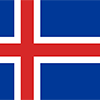
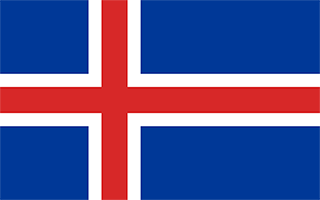
Blue with a red cross outlined in white extending to the edges of the flag; the vertical part of the cross is shifted to the hoist side in the style of the Dannebrog (Danish flag); the colors represent three of the elements that make up the island: red is for the island's volcanic fires, white recalls the snow and ice fields of the island, and blue is for the surrounding ocean.
Settled by Norwegian and Celtic (Scottish and Irish) immigrants during the late 9th and 10th centuries A.D., Iceland boasts the world's oldest functioning legislative assembly, the Althingi, established in 930. Independent for over 300 years, Iceland was subsequently ruled by Norway and Denmark. Fallout from the Askja volcano of 1875 devastated the Icelandic economy and caused widespread famine. Over the next quarter century, 20% of the island's population emigrated, mostly to Canada and the US. Denmark granted limited home rule in 1874 and complete independence in 1944. The second half of the 20th century saw substantial economic growth driven primarily by the fishing industry. The economy diversified greatly after the country joined the European Economic Area in 1994, but Iceland was especially hard hit by the global financial crisis in the years following 2008. The economy is now on an upward trajectory, fueled primarily by a tourism and construction boom. Literacy, longevity, and social cohesion are first rate by world standards.
Geography
| Area | ||
|---|---|---|
| Total (World Rank: 109) | 103,000 | sq km |
| Land (World Rank: 105) | 100,250 | sq km |
| Water (World Rank: 81) | 2,750 | sq km |
| Forest (World Rank: 104) | 17.50 | % |
| Comparative | slightly smaller than Pennsylvania; about the same size as Kentucky | |
| Coastline | ||
| 4970 | ||
| Elevation | ||
| Highest point (World Rank: 119) | 2,110 | m |
| Agricultural land | ||
| Total (World Rank: 170) | 18.70 | % |
| Arable (World Rank: 194) | 1.20 | % |
| Permanent pastures (World Rank: 104) | 17.50 | % |
| Map reference | ||
| Arctic Region | ||
| Environment | ||
| Issues |
| |
| Agreement party |
| |
| Agreement signed |
| |
| Hazzards |
| |
| Location | ||
| Northern Europe, island between the Greenland Sea and the North Atlantic Ocean, northwest of the United Kingdom | ||
| Climate | ||
| temperate; moderated by North Atlantic Current; mild, windy winters; damp, cool summers | ||
| Terrain | ||
| mostly plateau interspersed with mountain peaks, icefields; coast deeply indented by bays and fiords | ||
People
| Population | ||
|---|---|---|
| Total (World Rank: 177) | 339,747 | |
| Deathrate (World Rank: 148) | 0.64 | % |
| Birthrate (World Rank: 139) | 1.37 | % |
| Growthrate (World Rank: 100) | 1.13 | % |
| Migration rate (World Rank: 26) | 0.40 | % |
| Fertility rate (World Rank: 117) | 2.00 | % |
| Median age | ||
| Male (World Rank: 67) | 35.90 | |
| Female (World Rank: 69) | 37.10 | |
| Age structure | ||
| 0 14 male (World Rank: 179) | 35,418 | |
| 0 14 female (World Rank: 179) | 33,887 | |
| 15 24 male (World Rank: 181) | 23,190 | |
| 15 24 female (World Rank: 179) | 22,659 | |
| 25 54 male (World Rank: 177) | 68,579 | |
| 25 54 female (World Rank: 177) | 66,899 | |
| 55 64 male (World Rank: 168) | 20,119 | |
| 55 64 female (World Rank: 169) | 20,007 | |
| 65 x male (World Rank: 162) | 22,936 | |
| 65 x female (World Rank: 162) | 26,053 | |
| Health | ||
| Infant mortality rate (World Rank: 219) | 0.21 | % |
| Life expectancy total (World Rank: 6) | 83 | years |
| Life expectancy female (World Rank: 8) | 85 | years |
| Life expectancy male (World Rank: 5) | 81 | years |
| Physicians per 1000 (World Rank: 20) | 3.79 | |
| Hospital bed per 1000 (World Rank: 71) | 3.18 | |
| Sanitation access total (World Rank: 36) | 98.80 | % |
| Obesity adult (World Rank: 83) | 21.90 | % |
| Drinking water access (World Rank: 21) | 100.00 | % |
Energy
| Electricity | ||
|---|---|---|
| Production (World Rank: 77) | 18,560,000,000 | kWh |
| Consumption (World Rank: 72) | 17,980,000,000 | kWh |
| Source fossil (World Rank: 205) | 4.20 | % |
| Source nuclear (World Rank: 18) | 71.70 | % |
| Source renew (World Rank: 23) | 24.10 | % |
| Refined products | ||
| Consumption (World Rank: 137) | 19,800 | bbl / day |
| Export (World Rank: 101) | 2,845 | bbl / day |
| Import (World Rank: 117) | 19,530 | bbl / day |
| Carbon footprint | ||
| 3300000 | ||
Nation
| Budget | ||
|---|---|---|
| Education (World Rank: 10) | 8 | % of GDP |
| Military (World Rank: 153) | 0 | % of GDP |
| Health (World Rank: 42) | 9 | % of GDP |
| Surplus (World Rank: 2) | 17 | % of GDP |
| National symbol | ||
| gyrfalcon | ||
| National colours | ||
| white | ||
| Adjective | ||
| Icelandic | ||
| Noun | ||
| Icelander(s) | ||
| Background | ||
| Settled by Norwegian and Celtic (Scottish and Irish) immigrants during the late 9th and 10th centuries A.D., Iceland boasts the world's oldest functioning legislative assembly, the Althingi, established in 930. Independent for over 300 years, Iceland was subsequently ruled by Norway and Denmark. Fallout from the Askja volcano of 1875 devastated the Icelandic economy and caused widespread famine. Over the next quarter century, 20% of the island's population emigrated, mostly to Canada and the US. Denmark granted limited home rule in 1874 and complete independence in 1944. The second half of the 20th century saw substantial economic growth driven primarily by the fishing industry. The economy diversified greatly after the country joined the European Economic Area in 1994, but Iceland was especially hard hit by the global financial crisis in the years following 2008. The economy is now on an upward trajectory, fueled primarily by a tourism and construction boom. Literacy, longevity, and social cohesion are first rate by world standards. | ||
| Flag description | ||
| blue with a red cross outlined in white extending to the edges of the flag; the vertical part of the cross is shifted to the hoist side in the style of the Dannebrog (Danish flag); the colors represent three of the elements that make up the island: red is for the island's volcanic fires, white recalls the snow and ice fields of the island, and blue is for the surrounding ocean | ||
Economy
| Gdp | ||
|---|---|---|
| Purchasing power parity (World Rank: 153) | 16,520,000,000 | USD |
| Real growth rate (World Rank: 9) | 7.20 | % |
| Per capita purchasing power parity (World Rank: 27) | 49,200 | USD |
| Source agriculture (World Rank: 119) | 5.80 | % |
| Source industry (World Rank: 152) | 20.20 | % |
| Source service (World Rank: 46) | 74.00 | % |
| Labourforce | ||
| Total (World Rank: 171) | 196,500 | |
| Products | ||
| Industries |
| |
| Agriculture |
| |
| Exports |
| |
| Imports |
| |
Communication
| Phone | ||
|---|---|---|
| Landline total (World Rank: 126) | 164,566 | |
| Landline per 100 (World Rank: 19) | 49.00 | |
| Mobile per 100 (World Rank: 78) | 120.00 | |
| Assessment | 0 | |
| Internet | ||
| Users (World Rank: 154) | 329,967 | |
| Population (World Rank: 4) | 98.20 | % |
Transport
| Air | ||
|---|---|---|
| Airports paved (World Rank: 135) | 7.00 | |
| Airports unpaved (World Rank: 39) | 89.00 | |
| Road | ||
| Total length (World Rank: 128) | 12,890 | |
| Unpaved length (World Rank: 92) | 8,108 | |
This is a list of famous places in this country in alphabetical order.
 Akranes
- Akureyri
- Alftanes
- Arnarstapi
- Arneshreppur
- Arskogssandur
- Bakkafjordur
- Bakkagerdi
- Bildudalur
- Bloenduos
- Bolungarvik
- Bordeyri
- Borg in Grimsnes
- Borgarnes
- Breiddalsvik
- Brjanslaekur
- Budardalur
- Dalvik
- Djupivogur
- Drangsnes
- Egilsstadir
- Eskifjordur
- Eyrarbakki
- Faskrudsfjoerdur
- Fellabaer
- Flatey
- Flateyri
- Fludir
- Gardhabaer
- Gardur
- Geysir
- Grenvik
- Grimsey
- Grindavik
- Grundarfjordur
- Grundarhverfi
- Hafnarfjordur
- Hafnir
- Hella
- Hellissandur
- Hellnar
- Hjalteyri
- Hnifsdalur
- Hoefn
- Hofsos
- Holar
- Holmavik
- Hrisey
- Husavik
- Hvammstangi
- Hvanneyri
- Hveragerdi
- Hvolsvoellur
- Isafjordur
- Keflavik
- Kirkjubaejarklaustur
- Kopasker
- Kopavogur
- Laugar
- Laugaras
- Laugarbakki
- Laugarvatn
- Mosfellsbaer
- Neskaupstadur
- Njardvik
- Olafsfjordur
- Olafsvik
- Patreksfjordur
- Raufarhoefn
- Reydarfjordur
- Reykholar
- Reykholt
- Reykholt
- Reykjahlid
- Reykjanesbaer
- Reykjavik
- Rif
- Sangerdi
- Saudarkrokur
- Selfoss
- Seltjarnarnes
- Seydisfjoerdur
- Siglufjordur
- Skagastroend
- Stodvarfjordur
- Stokkseyri
- Stykkisholmur
- Sudavik
- Sudureyri
- Svalbardseyri
- THorshoefn
- THykkvibaer
- Talknafjordur
- Thingeyri
- Thorlakshofn
- Varmahlid
- Vestmannaeyjar
- Vik
- Vogar
- Vopnafjordur