
Estonia
in Northern Europe
Europe
 Latvia
 Russia
- Currency and Currency Code:
- Kroon - EEK
- Spoken languages:
- Estonian, Russian
- Local electricity:
- 230 V - 50 Hz (plugs: C, F)
- Mobile phone / cellular frequencies (MHz):
- 900 MHz, 1800 MHz, 3G, 4G
- ISO 2-Letter code:
- EE
- Internet top level domain:
- .ee
- Country phone prefix:
- +372
- Local Time (capital):
- Timezone:
- UTC/GMT offset: hours
Safety Score: 2,6 of 5.0 based on data from 9 authorites. Meaning we advice caution when travelling to Estonia.
Travel warnings are updated daily. Source: Travel Warning Estonia. Last Update: 2024-04-19 08:03:45
Explore Estonia
Estonia with its capital Tallinn is located in Europe (Eastern Europe, bordering the Baltic Sea and Gulf of Finland). It covers some 45,229 square kilometers (about twice the size of New Jersey) with 1,251,580 citizens. Estonian and Russian are the common languages used in Estonia. As an interesting fact, is sharing borders with Latvia and Russia.

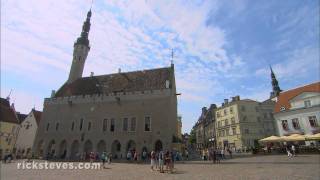
Estonia is a Baltic state in northeastern Europe. Public transport system is well-developed. Estonia's train network does not cover the whole country but it has a comprehensive bus network. The main reason most people first come to Estonia is to see the best protected and intact medieval city in Europe - Tallinn. Estonia remains cheaper than Western Europe, but it is no longer the bargain basement it used to be; and in touristy areas (say Tallinn's Old Town), prices are almost at Scandinavian levels. Estonia has a fair amount of foreign students studying in its universities, especially from Nordic countries, as Estonian diplomas are recognized throughout the EU. The police are very effective and they are not corrupt compared to neighboring Russia. The main advice to anyone worried about personal security is to stay reasonably sober despite tempting alcohol prices. When driving, make sure you have had absolutely no alcohol beforehand.
Popular Destinations in Estonia
Administrative regions of Estonia
- Harju
- Hiiumaa
- Ida-Virumaa
- Jarvamaa
- Jogevamaa
- Laane
- Laane-Virumaa
- Paernumaa
- Polvamaa
- Raplamaa
- Saare
- Tartu
- Valgamaa
- Viljandimaa
- Vorumaa
About the country

The topography is marshy, lowlands with flat in the north, hilly in the south. The average density of population is about 28 per km². The climate in Estonia can be described as maritime with wet, moderate winters, cool summers. Potential natural disasters are sometimes flooding occurs in the spring.
To reach someone Estonia dial +372 prior to a number. The local cellular networks are operated on 900 MHz, 1800 MHz, 3G, 4G. Websites typically end with the top level domain ".ee". If you want to bring electric appliances (e.g. battery chaarger), keep in min the local 230 V - 50 Hz (plugs: C, F). The sign for the locally used currency Kroon is EEK.
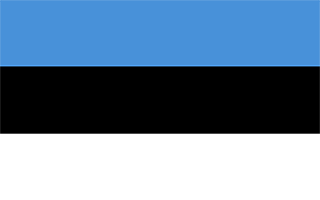
Three equal horizontal bands of blue (top), black, and white; various interpretations are linked to the flag colors; blue represents faith, loyalty, and devotion, while also reminiscent of the sky, sea, and lakes of the country; black symbolizes the soil of the country and the dark past and suffering endured by the Estonian people; white refers to the striving towards enlightenment and virtue, and is the color of birch bark and snow, as well as summer nights illuminated by the midnight sun.
After centuries of Danish, Swedish, German, and Russian rule, Estonia attained independence in 1918. Forcibly incorporated into the USSR in 1940 - an action never recognized by the US - it regained its freedom in 1991 with the collapse of the Soviet Union. Since the last Russian troops left in 1994, Estonia has been free to promote economic and political ties with the West. It joined both NATO and the EU in the spring of 2004, formally joined the OECD in late 2010, and adopted the euro as its official currency on 1 January 2011.
Geography
| Area | ||
|---|---|---|
| Total (World Rank: 133) | 45,228 | sq km |
| Land (World Rank: 132) | 42,388 | sq km |
| Water (World Rank: 79) | 2,840 | sq km |
| Forest (World Rank: 143) | 7.20 | % |
| Comparative | about twice the size of New Jersey | |
| Note | includes 1,520 islands in the Baltic Sea | |
| Coastline | ||
| 3794 | ||
| Landborder | ||
| 657 | ||
| Elevation | ||
| Highest point (World Rank: 205) | 318 | m |
| Agricultural land | ||
| Total (World Rank: 157) | 22.20 | % |
| Arable (World Rank: 81) | 14.90 | % |
| Permanent crops (World Rank: 183) | 0.10 | % |
| Permanent pastures (World Rank: 143) | 7.20 | % |
| Irrigated land (World Rank: 151) | 40 | sq km |
| Map reference | ||
| Europe | ||
| Environment | ||
| Issues |
| |
| Agreement party |
| |
| Hazzards | sometimes flooding occurs in the spring | |
| Location | ||
| Eastern Europe, bordering the Baltic Sea and Gulf of Finland, between Latvia and Russia | ||
| Climate | ||
| maritime; wet, moderate winters, cool summers | ||
| Terrain | ||
| marshy, lowlands; flat in the north, hilly in the south | ||
People
| Population | ||
|---|---|---|
| Total (World Rank: 157) | 1,251,580 | |
| Deathrate (World Rank: 18) | 1.26 | % |
| Birthrate (World Rank: 189) | 1.01 | % |
| Growthrate (World Rank: 219) | -0.57 | % |
| Migration rate (World Rank: 141) | -0.32 | % |
| Fertility rate (World Rank: 177) | 1.60 | % |
| Median age | ||
| Male (World Rank: 44) | 39.40 | |
| Female (World Rank: 9) | 46.10 | |
| Age structure | ||
| 0 14 male (World Rank: 164) | 104,130 | |
| 0 14 female (World Rank: 164) | 98,941 | |
| 15 24 male (World Rank: 167) | 58,432 | |
| 15 24 female (World Rank: 168) | 54,122 | |
| 25 54 male (World Rank: 158) | 261,366 | |
| 25 54 female (World Rank: 157) | 256,383 | |
| 55 64 male (World Rank: 144) | 76,591 | |
| 55 64 female (World Rank: 139) | 93,194 | |
| 65 x male (World Rank: 136) | 84,466 | |
| 65 x female (World Rank: 125) | 163,956 | |
| Health | ||
| Infant mortality rate (World Rank: 193) | 0.38 | % |
| Life expectancy total (World Rank: 81) | 77 | years |
| Life expectancy female (World Rank: 53) | 82 | years |
| Life expectancy male (World Rank: 114) | 72 | years |
| Physicians per 1000 (World Rank: 31) | 3.32 | |
| Hospital bed per 1000 (World Rank: 33) | 5.30 | |
| Sanitation access total (World Rank: 57) | 97.20 | % |
| Obesity adult (World Rank: 93) | 21.20 | % |
| Drinking water access (World Rank: 52) | 99.60 | % |
Energy
| Electricity | ||
|---|---|---|
| Production (World Rank: 100) | 9,779,000,000 | kWh |
| Consumption (World Rank: 101) | 8,158,000,000 | kWh |
| Export (World Rank: 32) | 5,613,000,000 | kWh |
| Import (World Rank: 48) | 3,573,000,000 | kWh |
| Source fossil (World Rank: 96) | 75.60 | % |
| Source nuclear (World Rank: 154) | 0.20 | % |
| Source renew (World Rank: 21) | 25.10 | % |
| Refined products | ||
| Consumption (World Rank: 121) | 29,140 | bbl / day |
| Export (World Rank: 68) | 21,250 | bbl / day |
| Import (World Rank: 95) | 34,410 | bbl / day |
| Natural gas | ||
| Consumption (World Rank: 98) | 964,000,000 | m³ |
| Import (World Rank: 60) | 0 | m³ |
| Carbon footprint | ||
| 5800000 | ||
Nation
| Budget | ||
|---|---|---|
| Education (World Rank: 79) | 5 | % of GDP |
| Military (World Rank: 48) | 2 | % of GDP |
| Health (World Rank: 97) | 6 | % of GDP |
| Surplus (World Rank: 39) | 0 | % of GDP |
| National symbol | ||
| cornflower | ||
| National colours | ||
| white | ||
| Adjective | ||
| Estonian | ||
| Noun | ||
| Estonian(s) | ||
| Background | ||
| After centuries of Danish, Swedish, German, and Russian rule, Estonia attained independence in 1918. Forcibly incorporated into the USSR in 1940 - an action never recognized by the US - it regained its freedom in 1991 with the collapse of the Soviet Union. Since the last Russian troops left in 1994, Estonia has been free to promote economic and political ties with the West. It joined both NATO and the EU in the spring of 2004, formally joined the OECD in late 2010, and adopted the euro as its official currency on 1 January 2011. | ||
| Flag description | ||
| three equal horizontal bands of blue (top), black, and white; various interpretations are linked to the flag colors; blue represents faith, loyalty, and devotion, while also reminiscent of the sky, sea, and lakes of the country; black symbolizes the soil of the country and the dark past and suffering endured by the Estonian people; white refers to the striving towards enlightenment and virtue, and is the color of birch bark and snow, as well as summer nights illuminated by the midnight sun | ||
Economy
| Gdp | ||
|---|---|---|
| Purchasing power parity (World Rank: 116) | 38,940,000,000 | USD |
| Real growth rate (World Rank: 129) | 2.10 | % |
| Per capita purchasing power parity (World Rank: 62) | 29,700 | USD |
| Source agriculture (World Rank: 146) | 3.40 | % |
| Source industry (World Rank: 95) | 27.90 | % |
| Source service (World Rank: 74) | 68.70 | % |
| Labourforce | ||
| Total (World Rank: 151) | 691,400 | |
| In poverty (World Rank: 103) | 21.30 | % |
| Products | ||
| Industries |
| |
| Agriculture |
| |
| Exports |
| |
| Imports |
| |
Communication
| Phone | ||
|---|---|---|
| Landline total (World Rank: 103) | 370,589 | |
| Landline per 100 (World Rank: 64) | 29.00 | |
| Mobile per 100 (World Rank: 25) | 151.00 | |
| Assessment | 0 | |
| Internet | ||
| Users (World Rank: 130) | 1,097,920 | |
| Population (World Rank: 31) | 87.20 | % |
Transport
| Air | ||
|---|---|---|
| Airports paved (World Rank: 103) | 13.00 | |
| Airports unpaved (World Rank: 152) | 5.00 | |
| Heliports (World Rank: 97) | 1.00 | |
| Rail | ||
| Total length (World Rank: 72) | 2,146 | |
| Road | ||
| Total length (World Rank: 73) | 58,412 | |
| Paved length (World Rank: 73) | 10,427 | |
| Unpaved length (World Rank: 33) | 47,985 | |
| Water | ||
| Total length (World Rank: 92) | 335 | |
This is a list of famous places in this country in alphabetical order.
 Abja-Paluoja
- Aegviidu
- Alajoe
- Alatskivi
- Arukuela
- Aseri
- Avinurme
- Elva
- Haanja
- Haapsalu
- Haljala
- Iisaku
- Imavere
- Jaerva-Jaani
- Jaervakandi
- Jaerve
- Jogeva
- Johvi
- Juuru
- Kadrina
- Kaeina
- Kaerdla
- Kallaste
- Kanepi
- Karksi-Nuia
- Kehra
- Kehtna
- Keila
- Kiili
- Kiiu
- Kilingi-Nomme
- Kivioli
- Koeru
- Kohila
- Kohtla-Jaerve
- Kohtla-Nomme
- Kolkja
- Kopu
- Kullamaa
- Kuressaare
- Laekvere
- Lasva
- Lihula
- Lohusuu
- Loksa
- Luunja
- Maardu
- Maerjamaa
- Moisakuela
- Mooste
- Mustvee
- Narva
- Narva-Joesuu
- Noo
- Padise
- Paernu
- Paide
- Palamuse
- Paldiski
- Poltsamaa
- Polva
- Puhja
- Raepina
- Raja
- Rakke
- Rakvere
- Rapla
- Riisipere
- Rongu
- Rouge
- Saku
- Saue
- Sillamaee
- Sindi
- Someru
- Sonda
- Suure-Jaani
- Tabasalu
- Tallinn
- Tamsalu
- Tapa
- Tartu
- Toila
- Tootsi
- Tori
- Torva
- Tudulinna
- Tueri
- Uuemoisa
- Uulu
- Vaeike-Maarja
- Vaendra
- Vaerska
- Valga
- Vastseliina
- Viimsi
- Viljandi
- Vohma
- Voru
- Vosu