Denmark
in Northern Europe
Europe
 Germany
- Currency and Currency Code:
- Krone - DKK
- Spoken languages:
- Danish, English, Faroese, German
- Local electricity:
- 230 V - 50 Hz (plugs: C, E, F, K)
- Mobile phone / cellular frequencies (MHz):
- 900 MHz, 1800 MHz, 3G, 4G
- ISO 2-Letter code:
- DK
- Internet top level domain:
- .dk
- Country phone prefix:
- +45
- Local Time (capital):
- Timezone:
- UTC/GMT offset: hours
Safety Score: 3,2 of 5.0 based on data from 9 authorites. Meaning please reconsider your need to travel to Denmark.
Travel warnings are updated daily. Source: Travel Warning Denmark. Last Update: 2024-04-25 08:17:04
Explore Denmark
Denmark with its capital Copenhagen is located in Europe (Northern Europe, bordering the Baltic Sea and the North Sea). It covers some 43,095 square kilometers (slightly less than twice the size of Massachusetts) with a population of 5,605,950. Danish, English, Faroese and German are some of the languages spoken by the majority in Denmark (consider regional differences). Did you know that Germany is the only bordering country.
Denmark is a country in Scandinavia. The main part of it is Jutland, a peninsula north of Germany. Sports are popular in Denmark, with football reigning supreme in popularity and counted as the national sport, followed by Gymnastics, Handball and Golf. Long distance train travel is best done with DSB, the Danish State Rail system. A number of long distance bus companies also operate. However, driving in Denmark between cities is very easy, with well-maintained roads everywhere. With a 7400 kilometre coastline, almost the same as Brazil's and longer than India's, you are never far from a beach in Denmark. Much has happened since the Danes were wrecking havoc to much of Northern Europe, but the more peaceful modern version of the Danes still take immense pride in their Viking heritage. Denmark is a very safe country, with almost no risk of natural disasters or animal attacks. Compared to most other countries crime and traffic are only minor risks, and most crime visitors are likely to encounter is non violent pickpocketing. As of 15 August 2007 it is not legal to smoke in any public space in Denmark. Denmark is teeming with amusement parks, and indeed features some of the most famous in world.
Popular Destinations in Denmark
Administrative regions of Denmark
About the country

Website: Denmark Tourism
Vesterbrogade 6 D
1620 Kobenhavn V
Denmark
Phone: +45 33 11 14 15
Fax: +45 33 93 14 16
Mail: dt@dt.dk
The terrain is low and flat to gently rolling plains. The average density of population is about 130 per km². The climate in Denmark can be described as temperatehumid and overcast, mild, windy winters and cool summers. Possible natural disasters include flooding is a threat in some areas of the country (e.g., parts of Jutland, along the southern coast of the island of Lolland) that are protected from the sea by a system of dikes.
To reach someone Denmark dial +45 prior to a number. The local cellular networks are operated on 900 MHz, 1800 MHz, 3G, 4G. Websites typically end with the top level domain ".dk". If you want to bring electric appliances (e.g. battery chaarger), keep in min the local 230 V - 50 Hz (plugs: C, E, F, K). The sign for the locally used currency Krone is DKK.
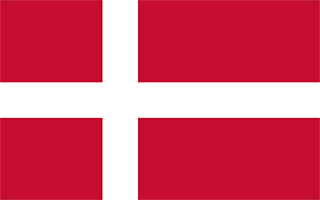
Red with a white cross that extends to the edges of the flag; the vertical part of the cross is shifted to the hoist side; the banner is referred to as the Dannebrog (Danish flag) and is one of the oldest national flags in the world; traditions as to the origin of the flag design vary, but the best known is a legend that the banner fell from the sky during an early-13th century battle; caught up by the Danish king before it ever touched the earth, this heavenly talisman inspired the royal army to victory; in actuality, the flag may derive from a crusade banner or ensign.
Once the seat of Viking raiders and later a major north European power, Denmark has evolved into a modern, prosperous nation that is participating in the general political and economic integration of Europe. It joined NATO in 1949 and the EEC (now the EU) in 1973. However, the country has opted out of certain elements of the EU's Maastricht Treaty, including the European Economic and Monetary Union, European defense cooperation, and issues concerning certain justice and home affairs.
Geography
| Area | ||
|---|---|---|
| Total (World Rank: 134) | 43,094 | sq km |
| Land (World Rank: 131) | 42,434 | sq km |
| Water (World Rank: 116) | 660 | sq km |
| Forest (World Rank: 163) | 4.40 | % |
| Comparative | slightly less than twice the size of Massachusetts | |
| Note | includes the island of Bornholm in the Baltic Sea and the rest of metropolitan Denmark (the Jutland Peninsula, and the major islands of Sjaelland and Fyn), but excludes the Faroe Islands and Greenland | |
| Coastline | ||
| 7314 | ||
| Landborder | ||
| 140 | ||
| Elevation | ||
| Lowest point (World Rank: 50) | -7 | m |
| Highest point (World Rank: 215) | 171 | m |
| Agricultural land | ||
| Total (World Rank: 37) | 63.40 | % |
| Arable (World Rank: 3) | 58.90 | % |
| Permanent crops (World Rank: 190) | 0.10 | % |
| Permanent pastures (World Rank: 163) | 4.40 | % |
| Irrigated land (World Rank: 59) | 4,350 | sq km |
| Map reference | ||
| Europe | ||
| Environment | ||
| Issues |
| |
| Agreement party |
| |
| Hazzards | flooding is a threat in some areas of the country (e.g., parts of Jutland, along the southern coast of the island of Lolland) that are protected from the sea by a system of dikes | |
| Location | ||
| Northern Europe, bordering the Baltic Sea and the North Sea, on a peninsula north of Germany (Jutland); also includes several major islands (Sjaelland, Fyn, and Bornholm) | ||
| Climate | ||
| temperate; humid and overcast; mild, windy winters and cool summers | ||
| Terrain | ||
| low and flat to gently rolling plains | ||
People
| Population | ||
|---|---|---|
| Total (World Rank: 116) | 5,605,950 | |
| Deathrate (World Rank: 35) | 1.03 | % |
| Birthrate (World Rank: 183) | 1.05 | % |
| Growthrate (World Rank: 179) | 0.22 | % |
| Migration rate (World Rank: 45) | 0.21 | % |
| Fertility rate (World Rank: 165) | 1.73 | % |
| Median age | ||
| Male (World Rank: 22) | 41.20 | |
| Female (World Rank: 36) | 43.20 | |
| Age structure | ||
| 0 14 male (World Rank: 124) | 472,106 | |
| 0 14 female (World Rank: 125) | 447,997 | |
| 15 24 male (World Rank: 119) | 374,379 | |
| 15 24 female (World Rank: 118) | 358,927 | |
| 25 54 male (World Rank: 119) | 1,080,120 | |
| 25 54 female (World Rank: 114) | 1,092,500 | |
| 55 64 male (World Rank: 83) | 349,091 | |
| 55 64 female (World Rank: 89) | 352,903 | |
| 65 x male (World Rank: 68) | 483,519 | |
| 65 x female (World Rank: 67) | 594,405 | |
| Health | ||
| Infant mortality rate (World Rank: 188) | 0.40 | % |
| Life expectancy total (World Rank: 47) | 80 | years |
| Life expectancy female (World Rank: 50) | 82 | years |
| Life expectancy male (World Rank: 42) | 77 | years |
| Physicians per 1000 (World Rank: 24) | 3.65 | |
| Hospital bed per 1000 (World Rank: 64) | 3.50 | |
| Sanitation access total (World Rank: 23) | 99.60 | % |
| Obesity adult (World Rank: 110) | 19.70 | % |
| Drinking water access (World Rank: 13) | 100.00 | % |
Energy
| Electricity | ||
|---|---|---|
| Production (World Rank: 67) | 27,340,000,000 | kWh |
| Consumption (World Rank: 61) | 31,410,000,000 | kWh |
| Export (World Rank: 22) | 9,919,000,000 | kWh |
| Import (World Rank: 13) | 14,980,000,000 | kWh |
| Source fossil (World Rank: 153) | 48.10 | % |
| Source renew (World Rank: 1) | 53.60 | % |
| Crude oil | ||
| Production (World Rank: 39) | 140,600 | bbl / day |
| Exports (World Rank: 38) | 78,370 | bbl / day |
| Imports (World Rank: 48) | 77,950 | bbl / day |
| Proved reserves (World Rank: 48) | 490,600,000 | bbl |
| Refined products | ||
| Production (World Rank: 52) | 187,700 | bbl / day |
| Consumption (World Rank: 64) | 158,200 | bbl / day |
| Export (World Rank: 33) | 171,600 | bbl / day |
| Import (World Rank: 38) | 165,400 | bbl / day |
| Natural gas | ||
| Production (World Rank: 51) | 4,618,000,000 | m³ |
| Consumption (World Rank: 68) | 4,392,000,000 | m³ |
| Export (World Rank: 36) | 2,192,000,000 | m³ |
| Import (World Rank: 46) | 0 | m³ |
| Carbon footprint | ||
| 42000000 | ||
Nation
| Budget | ||
|---|---|---|
| Education (World Rank: 5) | 9 | % of GDP |
| Military (World Rank: 104) | 1 | % of GDP |
| Health (World Rank: 16) | 11 | % of GDP |
| Surplus (World Rank: 54) | -1 | % of GDP |
| National symbol | ||
| mute swan | ||
| National colours | ||
| white | ||
| Adjective | ||
| Danish | ||
| Noun | ||
| Dane(s) | ||
| Background | ||
| Once the seat of Viking raiders and later a major north European power, Denmark has evolved into a modern, prosperous nation that is participating in the general political and economic integration of Europe. It joined NATO in 1949 and the EEC (now the EU) in 1973. However, the country has opted out of certain elements of the EU's Maastricht Treaty, including the European Economic and Monetary Union, European defense cooperation, and issues concerning certain justice and home affairs. | ||
| Flag description | ||
| red with a white cross that extends to the edges of the flag; the vertical part of the cross is shifted to the hoist side; the banner is referred to as the Dannebrog (Danish flag) and is one of the oldest national flags in the world; traditions as to the origin of the flag design vary, but the best known is a legend that the banner fell from the sky during an early-13th century battle; caught up by the Danish king before it ever touched the earth, this heavenly talisman inspired the royal army to victory; in actuality, the flag may derive from a crusade banner or ensign | ||
Economy
| Gdp | ||
|---|---|---|
| Purchasing power parity (World Rank: 59) | 275,300,000,000 | USD |
| Real growth rate (World Rank: 148) | 1.70 | % |
| Per capita purchasing power parity (World Rank: 30) | 48,200 | USD |
| Source agriculture (World Rank: 193) | 1.10 | % |
| Source industry (World Rank: 123) | 23.60 | % |
| Source service (World Rank: 41) | 75.30 | % |
| Labourforce | ||
| Total (World Rank: 103) | 2,953,000 | |
| In poverty (World Rank: 140) | 13.40 | % |
| Products | ||
| Industries |
| |
| Agriculture |
| |
| Exports |
| |
| Imports |
| |
Communication
| Phone | ||
|---|---|---|
| Landline total (World Rank: 63) | 1,557,100 | |
| Landline per 100 (World Rank: 66) | 28.00 | |
| Mobile per 100 (World Rank: 69) | 125.00 | |
| Assessment | 0 | |
| Internet | ||
| Users (World Rank: 72) | 5,424,170 | |
| Population (World Rank: 11) | 97.00 | % |
Transport
| Air | ||
|---|---|---|
| Airports paved (World Rank: 63) | 28.00 | |
| Airports unpaved (World Rank: 58) | 52.00 | |
| Rail | ||
| Total length (World Rank: 55) | 3,476 | |
| Road | ||
| Total length (World Rank: 64) | 74,558 | |
| Paved length (World Rank: 36) | 74,558 | |
| Water | ||
| Total length (World Rank: 89) | 400 | |
This is a list of famous places in this country in alphabetical order.
 AEroskobing
- Aabenraa
- Aalborg
- Aars
- Abybro
- Albertslund
- Arhus
- Assens
- Ballerup
- Billund
- Birkerod
- Bogense
- Bramming
- Bronderslev
- Charlottenlund
- Copenhagen
- Dragor
- Elsinore
- Esbjerg
- Fakse
- Farum
- Fredericia
- Frederiksberg
- Frederikshavn
- Frederikssund
- Frederiksvaerk
- Glostrup
- Grasten
- Grenaa
- Greve
- Grindsted
- Haderslev
- Hadsund
- Haslev
- Helsinge
- Herning
- Hillerod
- Hinnerup
- Hirtshals
- Hjorring
- Hobro
- Holbaek
- Holstebro
- Horsens
- Horsholm
- Hvidovre
- Ikast
- Ishoj
- Kalundborg
- Kerteminde
- Koge
- Kolding
- Kongens Lyngby
- Korsor
- Lemvig
- Lillerod
- Logumkloster
- Maribo
- Middelfart
- Naestved
- Nakskov
- Nordborg
- Nordby
- Norresundby
- Nyborg
- Nykobing Falster
- Nykobing Mors
- Odder
- Odense
- Randers
- Ribe
- Ringe
- Ringkobing
- Ringsted
- Rodovre
- Ronne
- Roskilde
- Rudkobing
- Sakskobing
- Silkeborg
- Skagen
- Skanderborg
- Skive
- Slagelse
- Sonderborg
- Soro
- Stenlose
- Struer
- Svendborg
- Taastrup
- Tarnby
- Thisted
- Tonder
- Vallensbaek
- Varde
- Vejen
- Vejle
- Viborg
- Vojens
- Vordingborg