Croatia
in Southern Europe
Europe
 Bosnia and Herzegovina
 Hungary
 Montenegro
 Serbia
 Slovenia
- Currency and Currency Code:
- Kuna - HRK
- Spoken languages:
- Croatian, Serbian
- Local electricity:
- 230 V - 50 Hz (plugs: C, F)
- Mobile phone / cellular frequencies (MHz):
- 900 MHz, 1800 MHz, 3G, 4G
- ISO 2-Letter code:
- HR
- Internet top level domain:
- .hr
- Country phone prefix:
- +385
- Local Time (capital):
- Timezone:
- UTC/GMT offset: hours
Safety Score: 2,8 of 5.0 based on data from 9 authorites. Meaning we advice caution when travelling to Croatia.
Travel warnings are updated daily. Source: Travel Warning Croatia. Last Update: 2024-04-24 08:14:40
Explore Croatia
Croatia with its capital Zagreb is located in Europe (Southeastern Europe, bordering the Adriatic Sea). It covers some 56,595 square kilometers (slightly smaller than West Virginia) with a population of 4,292,100. Croatian and Serbian are the languages spoken by people in Croatia. Bosnia and Herzegovina, Hungary, Montenegro, Serbia and Slovenia are bordering countries.
Croatia is a country situated in the Balkans and in Central Europe. Northern Croatia has a temperate continental climate whereas the central and upland regions have a mountainous climate. The entire Adriatic coast has a pleasant Mediterranean climate. Croatia was the first country in Europe to start with the concept of commercial naturist resorts. According to some estimates about 15% of all tourists that visit the country are naturists or nudists (more than one million each year).
Popular Destinations in Croatia
Administrative regions of Croatia
- Bjelovarsko-Bilogorska Zupanija
- Brodsko-Posavska Zupanija
- Dubrovacko-Neretvanska Zupanija
- Grad Zagreb
- Istarska Zupanija
- Karlovacka Zupanija
- Koprivnicko-Krizevacka Zupanija
- Krapinsko-Zagorska Zupanija
- Licko-Senjska Zupanija
- Megimurska Zupanija
- Osjecko-Baranjska Zupanija
- Pozesko-Slavonska Zupanija
- Primorsko-Goranska Zupanija
- Sibensko-Kninska Zupanija
- Sisacko-Moslavacka Zupanija
- Splitsko-Dalmatinska Zupanija
- Varazdinska Zupanija
- Viroviticko-Podravska Zupanija
- Vukovarsko-Srijemska Zupanija
- Zadarska Zupanija
- Zagreb County
About the country
Website: Croatia Tourism
Iblerov trg 10/IV
10 000 Zagreb
Croatia
Phone: +385 1 4699 333 4556 455
Fax: +385 1 4557 827
Mail: info@htz.hr
The terrain is geographically diverse having flat plains along Hungarian border, low mountains and highlands near Adriatic coastline and islands. The average density of population is about 76 per km². The climate in Croatia can be described as Mediterranean and continentalcontinental climate predominant with hot summers and cold winters, mild winters, dry summers along coast. Possible natural disasters include destructive earthquakes.
To reach someone Croatia dial +385 prior to a number. The local cellular networks are operated on 900 MHz, 1800 MHz, 3G, 4G. Websites typically end with the top level domain ".hr". If you want to bring electric appliances (e.g. battery chaarger), keep in min the local 230 V - 50 Hz (plugs: C, F). The sign for the locally used currency Kuna is HRK.
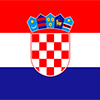
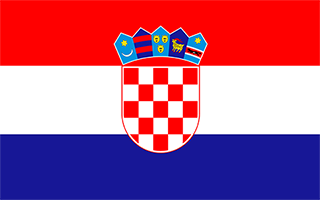
Three equal horizontal bands of red (top), white, and blue - the Pan-Slav colors - superimposed by the Croatian coat of arms; the coat of arms consists of one main shield (a checkerboard of 13 red and 12 silver (white) fields) surmounted by five smaller shields that form a crown over the main shield; the five small shields represent five historic regions (from left to right): Croatia, Dubrovnik, Dalmatia, Istria, and Slavonia.
The lands that today comprise Croatia were part of the Austro-Hungarian Empire until the close of World War I. In 1918, the Croats, Serbs, and Slovenes formed a kingdom known after 1929 as Yugoslavia. Following World War II, Yugoslavia became a federal independent communist state under the strong hand of Marshal TITO. Although Croatia declared its independence from Yugoslavia in 1991, it took four years of sporadic, but often bitter, fighting before occupying Serb armies were mostly cleared from Croatian lands, along with a majority of Croatia's ethnic Serb population. Under UN supervision, the last Serb-held enclave in eastern Slavonia was returned to Croatia in 1998. The country joined NATO in April 2009 and the EU in July 2013.
Geography
| Area | ||
|---|---|---|
| Total (World Rank: 128) | 56,594 | sq km |
| Land (World Rank: 125) | 55,974 | sq km |
| Water (World Rank: 117) | 620 | sq km |
| Forest (World Rank: 148) | 6.20 | % |
| Comparative | slightly smaller than West Virginia | |
| Coastline | ||
| 5835 | ||
| Landborder | ||
| 2237 | ||
| Elevation | ||
| Highest point (World Rank: 135) | 1,831 | m |
| Agricultural land | ||
| Total (World Rank: 150) | 23.70 | % |
| Arable (World Rank: 74) | 16.00 | % |
| Permanent crops (World Rank: 105) | 1.50 | % |
| Permanent pastures (World Rank: 148) | 6.20 | % |
| Irrigated land (World Rank: 130) | 240 | sq km |
| Map reference | ||
| Europe | ||
| Environment | ||
| Issues |
| |
| Agreement party |
| |
| Hazzards | destructive earthquakes | |
| Location | ||
| Southeastern Europe, bordering the Adriatic Sea, between Bosnia and Herzegovina and Slovenia | ||
| Climate | ||
| Mediterranean and continental; continental climate predominant with hot summers and cold winters; mild winters, dry summers along coast | ||
| Terrain | ||
| geographically diverse; flat plains along Hungarian border, low mountains and highlands near Adriatic coastline and islands | ||
People
| Population | ||
|---|---|---|
| Total (World Rank: 127) | 4,292,100 | |
| Deathrate (World Rank: 20) | 1.22 | % |
| Birthrate (World Rank: 207) | 0.89 | % |
| Growthrate (World Rank: 216) | -0.50 | % |
| Migration rate (World Rank: 117) | -0.17 | % |
| Fertility rate (World Rank: 208) | 1.40 | % |
| Median age | ||
| Male (World Rank: 23) | 41.10 | |
| Female (World Rank: 15) | 45.00 | |
| Age structure | ||
| 0 14 male (World Rank: 142) | 314,287 | |
| 0 14 female (World Rank: 142) | 295,520 | |
| 15 24 male (World Rank: 136) | 247,394 | |
| 15 24 female (World Rank: 136) | 235,166 | |
| 25 54 male (World Rank: 128) | 867,978 | |
| 25 54 female (World Rank: 126) | 867,125 | |
| 55 64 male (World Rank: 89) | 309,794 | |
| 55 64 female (World Rank: 92) | 326,102 | |
| 65 x male (World Rank: 82) | 330,406 | |
| 65 x female (World Rank: 71) | 498,323 | |
| Health | ||
| Infant mortality rate (World Rank: 142) | 0.93 | % |
| Life expectancy total (World Rank: 89) | 76 | years |
| Life expectancy female (World Rank: 86) | 79 | years |
| Life expectancy male (World Rank: 102) | 73 | years |
| Physicians per 1000 (World Rank: 37) | 3.13 | |
| Hospital bed per 1000 (World Rank: 26) | 5.90 | |
| Sanitation access total (World Rank: 58) | 97.00 | % |
| Obesity adult (World Rank: 59) | 24.40 | % |
| Drinking water access (World Rank: 51) | 99.60 | % |
Energy
| Electricity | ||
|---|---|---|
| Production (World Rank: 97) | 10,820,000,000 | kWh |
| Consumption (World Rank: 75) | 15,800,000,000 | kWh |
| Export (World Rank: 45) | 1,858,000,000 | kWh |
| Import (World Rank: 28) | 8,640,000,000 | kWh |
| Source fossil (World Rank: 163) | 43.80 | % |
| Source nuclear (World Rank: 50) | 39.00 | % |
| Source renew (World Rank: 60) | 12.00 | % |
| Crude oil | ||
| Production (World Rank: 77) | 13,580 | bbl / day |
| Imports (World Rank: 55) | 47,200 | bbl / day |
| Proved reserves (World Rank: 77) | 71,000,000 | bbl |
| Refined products | ||
| Production (World Rank: 74) | 65,860 | bbl / day |
| Consumption (World Rank: 91) | 69,000 | bbl / day |
| Export (World Rank: 56) | 33,660 | bbl / day |
| Import (World Rank: 98) | 31,840 | bbl / day |
| Natural gas | ||
| Production (World Rank: 58) | 1,829,000,000 | m³ |
| Consumption (World Rank: 70) | 3,590,000,000 | m³ |
| Export (World Rank: 43) | 422,000,000 | m³ |
| Import (World Rank: 63) | 0 | m³ |
| Carbon footprint | ||
| 19000000 | ||
Nation
| Budget | ||
|---|---|---|
| Education (World Rank: 85) | 5 | % of GDP |
| Military (World Rank: 84) | 1 | % of GDP |
| Health (World Rank: 58) | 8 | % of GDP |
| Surplus (World Rank: 57) | -1 | % of GDP |
| National symbol | ||
| red-white checkerboard | ||
| National colours | ||
| white | ||
| Adjective | ||
| Croatian | ||
| Noun | ||
| Croat(s), Croatian(s) | ||
| Background | ||
| The lands that today comprise Croatia were part of the Austro-Hungarian Empire until the close of World War I. In 1918, the Croats, Serbs, and Slovenes formed a kingdom known after 1929 as Yugoslavia. Following World War II, Yugoslavia became a federal independent communist state under the strong hand of Marshal TITO. Although Croatia declared its independence from Yugoslavia in 1991, it took four years of sporadic, but often bitter, fighting before occupying Serb armies were mostly cleared from Croatian lands, along with a majority of Croatia's ethnic Serb population. Under UN supervision, the last Serb-held enclave in eastern Slavonia was returned to Croatia in 1998. The country joined NATO in April 2009 and the EU in July 2013. | ||
| Flag description | ||
| three equal horizontal bands of red (top), white, and blue - the Pan-Slav colors - superimposed by the Croatian coat of arms; the coat of arms consists of one main shield (a checkerboard of 13 red and 12 silver (white) fields) surmounted by five smaller shields that form a crown over the main shield; the five small shields represent five historic regions (from left to right): Croatia, Dubrovnik, Dalmatia, Istria, and Slavonia | ||
Economy
| Gdp | ||
|---|---|---|
| Purchasing power parity (World Rank: 83) | 95,650,000,000 | USD |
| Real growth rate (World Rank: 97) | 3.00 | % |
| Per capita purchasing power parity (World Rank: 80) | 22,900 | USD |
| Source agriculture (World Rank: 137) | 4.10 | % |
| Source industry (World Rank: 105) | 26.50 | % |
| Source service (World Rank: 70) | 69.40 | % |
| Labourforce | ||
| Total (World Rank: 128) | 1,617,000 | |
| In poverty (World Rank: 111) | 19.50 | % |
| Products | ||
| Industries |
| |
| Agriculture |
| |
| Exports |
| |
| Imports |
| |
Communication
| Phone | ||
|---|---|---|
| Landline total (World Rank: 65) | 1,435,980 | |
| Landline per 100 (World Rank: 55) | 33.00 | |
| Mobile per 100 (World Rank: 132) | 102.00 | |
| Assessment | 0 | |
| Internet | ||
| Users (World Rank: 95) | 3,135,950 | |
| Population (World Rank: 68) | 72.70 | % |
Transport
| Air | ||
|---|---|---|
| Airports paved (World Rank: 72) | 24.00 | |
| Airports unpaved (World Rank: 62) | 45.00 | |
| Heliports (World Rank: 95) | 1.00 | |
| Rail | ||
| Total length (World Rank: 64) | 2,722 | |
| Road | ||
| Total length (World Rank: 99) | 26,958 | |
| Water | ||
| Total length (World Rank: 75) | 785 | |
This is a list of famous places in this country in alphabetical order.
 Bakar
Bakar- Bedekovcina
- Beli Manastir
- Belisce
- Benkovac
- Biograd na Moru
- Bjelovar
- Bol
- Buje
- Buzet
- Cakovec
- Cavtat
- Cazma
- Cepin
- Crikvenica
- Daruvar
- Delnice
- Drnis
- Dubrovnik
- GJakovo
- Garesnica
- Glina
- Gospic
- Hrvatska Kostajnica
- Hvar
- Ilok
- Imotski
- Ivanec
- Ivankovo
- Jastrebarsko
- Karlovac
- Karlovac
- Kastav
- Knin
- Komiza
- Koprivnica
- Korcula
- Krapina
- Krizevci
- Kutina
- Labin
- Lepoglava
- Ludbreg
- Makarska
- Mali Losinj
- Matulji
- Metkovic
- Nasice
- Nin
- Nova Gradiska
- Novalja
- Novi Vinodolski
- Novska
- Ogulin
- Omis
- Opatija
- Orahovica
- Osijek
- Otocac
- Pag
- Pakrac
- Pazin
- Petrinja
- Pleternica
- Porec
- Pozega
- Prelog
- Pula
- Rab
- Rijeka
- Rovinj
- Samobor
- Senj
- Sibenik
- Sinj
- Sisak
- Slatina
- Slavonski Brod
- Slunj
- Solin
- Split
- Ston
- Supetar
- Trogir
- Umag
- Valpovo
- Varazdin
- Vela Luka
- Velika Gorica
- Vinkovci
- Virovitica
- Vodice
- Vodnjan
- Vrbovec
- Vrsar
- Vukovar
- Zadar
- Zagreb
- Zapresic
- Zupanja