Belgium
in Western Europe
Europe
 France
 Germany
 Luxembourg
 Netherlands
- Currency and Currency Code:
- Euro - EUR
- Spoken languages:
- Dutch, French, German
- Local electricity:
- 230 V - 50 Hz (plugs: C, E)
- Mobile phone / cellular frequencies (MHz):
- 900 MHz, 1800 MHz, 3G, 4G
- ISO 2-Letter code:
- BE
- Internet top level domain:
- .be
- Country phone prefix:
- +32
- Local Time (capital):
- Timezone:
- UTC/GMT offset: hours
Safety Score: 3,0 of 5.0 based on data from 9 authorites. Meaning we advice caution when travelling to Belgium.
Travel warnings are updated daily. Source: Travel Warning Belgium. Last Update: 2024-04-24 08:14:40
Explore Belgium
Belgium with its capital Brussels is located in Europe (Western Europe, bordering the North Sea). It covers some 30,529 square kilometers (about the size of Maryland) with 11,491,300 citizens. Dutch, French and German are the languages commonly used by the people in Belgium (consider regional differences). France, Germany, Luxembourg and Netherlands are bordering countries.
Belgium is a low-lying country on the North Sea coast. It has a very high rate of urbanization and has an astonishing number of cities for such a small territory. Being such a small country (300 km as its maximum distance), you can get anywhere in a couple of hours. Public transport is fast and comfortable. Belgium has three official languages: Dutch, French and German. However, English is widely spoken by the younger generations. Belgium is famous for its good cuisine and people like to go to restaurants frequently. The style is influenced not only by the surrounding countries but also by many other countries. Belgium's capital and the unofficial capital of the EU is Brussels with a nice historic centre. One of the most multicultural cities in Europe.
Popular Destinations in Belgium
Administrative regions of Belgium
About the country

Website: Belgium Tourism
Grote Markt 13 - 15
B - 2000 Antwerp
Belgium
Phone: +32 3 232 01 03
Fax: +32 3 231 19 37
Mail: visit@antwerpen.be
The landscape is flat coastal plains in northwest, central rolling hills, rugged mountains of Ardennes Forest in southeast. The average density of population is about 376 per km². The climate in Belgium can be described as temperatemild winters, cool summers, rainy, humid, cloudy. Potential threats by nature are flooding is a threat along rivers and in areas of reclaimed coastal land, protected from the sea by concrete dikes.
To reach someone Belgium dial +32 prior to a number. The local cellular networks are operated on 900 MHz, 1800 MHz, 3G, 4G. Websites typically end with the top level domain ".be". If you want to bring electric appliances (e.g. battery chaarger), keep in min the local 230 V - 50 Hz (plugs: C, E). The sign for the locally used currency Euro is EUR.
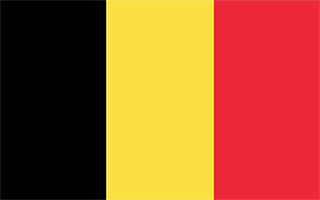
Three equal vertical bands of black (hoist side), yellow, and red; the vertical design was based on the flag of France; the colors are those of the arms of the duchy of Brabant (yellow lion with red claws and tongue on a black field).
Belgium became independent from the Netherlands in 1830; it was occupied by Germany during World Wars I and II. The country prospered in the past half century as a modern, technologically advanced European state and member of NATO and the EU. Political divisions between the Dutch-speaking Flemish of the north and the French-speaking Walloons of the south have led in recent years to constitutional amendments granting these regions formal recognition and autonomy. Its capital, Brussels, is home to numerous international organizations including the EU and NATO.
Geography
| Area | ||
|---|---|---|
| Total (World Rank: 141) | 30,528 | sq km |
| Land (World Rank: 139) | 30,278 | sq km |
| Water (World Rank: 131) | 250 | sq km |
| Forest (World Rank: 108) | 16.10 | % |
| Comparative | about the size of Maryland | |
| Coastline | ||
| 66.5 | ||
| Landborder | ||
| 1297 | ||
| Elevation | ||
| Highest point (World Rank: 186) | 694 | m |
| Agricultural land | ||
| Total (World Rank: 86) | 44.10 | % |
| Arable (World Rank: 37) | 27.20 | % |
| Permanent crops (World Rank: 131) | 0.80 | % |
| Permanent pastures (World Rank: 108) | 16.10 | % |
| Irrigated land (World Rank: 133) | 230 | sq km |
| Map reference | ||
| Europe | ||
| Environment | ||
| Issues |
| |
| Agreement party |
| |
| Hazzards | flooding is a threat along rivers and in areas of reclaimed coastal land, protected from the sea by concrete dikes | |
| Location | ||
| Western Europe, bordering the North Sea, between France and the Netherlands | ||
| Climate | ||
| temperate; mild winters, cool summers; rainy, humid, cloudy | ||
| Terrain | ||
| flat coastal plains in northwest, central rolling hills, rugged mountains of Ardennes Forest in southeast | ||
People
| Population | ||
|---|---|---|
| Total (World Rank: 77) | 11,491,300 | |
| Deathrate (World Rank: 47) | 0.97 | % |
| Birthrate (World Rank: 173) | 1.13 | % |
| Growthrate (World Rank: 141) | 0.70 | % |
| Migration rate (World Rank: 21) | 0.54 | % |
| Fertility rate (World Rank: 150) | 1.78 | % |
| Median age | ||
| Male (World Rank: 35) | 40.20 | |
| Female (World Rank: 40) | 42.70 | |
| Age structure | ||
| 0 14 male (World Rank: 97) | 1,010,200 | |
| 0 14 female (World Rank: 97) | 961,994 | |
| 15 24 male (World Rank: 93) | 665,483 | |
| 15 24 female (World Rank: 93) | 637,700 | |
| 25 54 male (World Rank: 73) | 2,320,840 | |
| 25 54 female (World Rank: 75) | 2,281,410 | |
| 55 64 male (World Rank: 53) | 732,062 | |
| 55 64 female (World Rank: 53) | 746,212 | |
| 65 x male (World Rank: 43) | 929,594 | |
| 65 x female (World Rank: 45) | 1,205,840 | |
| Health | ||
| Infant mortality rate (World Rank: 203) | 0.34 | % |
| Life expectancy total (World Rank: 30) | 81 | years |
| Life expectancy female (World Rank: 29) | 84 | years |
| Life expectancy male (World Rank: 32) | 79 | years |
| Physicians per 1000 (World Rank: 42) | 2.97 | |
| Hospital bed per 1000 (World Rank: 16) | 6.50 | |
| Sanitation access total (World Rank: 24) | 99.50 | % |
| Obesity adult (World Rank: 82) | 22.10 | % |
| Drinking water access (World Rank: 28) | 100.00 | % |
Energy
| Electricity | ||
|---|---|---|
| Production (World Rank: 42) | 64,780,000,000 | kWh |
| Consumption (World Rank: 35) | 81,960,000,000 | kWh |
| Export (World Rank: 26) | 8,465,000,000 | kWh |
| Import (World Rank: 14) | 14,650,000,000 | kWh |
| Source fossil (World Rank: 177) | 34.80 | % |
| Source nuclear (World Rank: 70) | 28.00 | % |
| Source renew (World Rank: 11) | 32.10 | % |
| Crude oil | ||
| Imports (World Rank: 17) | 639,500 | bbl / day |
| Refined products | ||
| Production (World Rank: 24) | 701,700 | bbl / day |
| Consumption (World Rank: 30) | 662,400 | bbl / day |
| Export (World Rank: 11) | 597,000 | bbl / day |
| Import (World Rank: 12) | 585,700 | bbl / day |
| Natural gas | ||
| Consumption (World Rank: 40) | 23,010,000,000 | m³ |
| Export (World Rank: 38) | 1,694,000,000 | m³ |
| Import (World Rank: 56) | 0 | m³ |
| Carbon footprint | ||
| 93620000 | ||
Nation
| Budget | ||
|---|---|---|
| Education (World Rank: 25) | 6 | % of GDP |
| Military (World Rank: 127) | 1 | % of GDP |
| Health (World Rank: 18) | 11 | % of GDP |
| Surplus (World Rank: 99) | -3 | % of GDP |
| National symbol | ||
| golden rampant lion | ||
| National colours | ||
| yellow | ||
| Adjective | ||
| Belgian | ||
| Noun | ||
| Belgian(s) | ||
| Background | ||
| Belgium became independent from the Netherlands in 1830; it was occupied by Germany during World Wars I and II. The country prospered in the past half century as a modern, technologically advanced European state and member of NATO and the EU. Political divisions between the Dutch-speaking Flemish of the north and the French-speaking Walloons of the south have led in recent years to constitutional amendments granting these regions formal recognition and autonomy. Its capital, Brussels, is home to numerous international organizations including the EU and NATO. | ||
| Flag description | ||
| three equal vertical bands of black (hoist side), yellow, and red; the vertical design was based on the flag of France; the colors are those of the arms of the duchy of Brabant (yellow lion with red claws and tongue on a black field) | ||
Economy
| Gdp | ||
|---|---|---|
| Purchasing power parity (World Rank: 37) | 509,000,000,000 | USD |
| Real growth rate (World Rank: 165) | 1.20 | % |
| Per capita purchasing power parity (World Rank: 35) | 45,000 | USD |
| Source agriculture (World Rank: 204) | 0.70 | % |
| Source industry (World Rank: 130) | 22.30 | % |
| Source service (World Rank: 33) | 77.00 | % |
| Labourforce | ||
| Total (World Rank: 76) | 5,291,000 | |
| In poverty (World Rank: 128) | 15.10 | % |
| Products | ||
| Industries |
| |
| Agriculture |
| |
| Exports |
| |
| Imports |
| |
Communication
| Phone | ||
|---|---|---|
| Landline total (World Rank: 33) | 4,371,060 | |
| Landline per 100 (World Rank: 43) | 38.00 | |
| Mobile per 100 (World Rank: 112) | 109.00 | |
| Assessment | 0 | |
| Internet | ||
| Users (World Rank: 47) | 9,870,730 | |
| Population (World Rank: 32) | 86.50 | % |
Transport
| Air | ||
|---|---|---|
| Airports paved (World Rank: 66) | 26.00 | |
| Airports unpaved (World Rank: 117) | 15.00 | |
| Heliports (World Rank: 80) | 1.00 | |
| Rail | ||
| Total length (World Rank: 53) | 3,592 | |
| Road | ||
| Total length (World Rank: 33) | 154,012 | |
| Paved length (World Rank: 26) | 120,514 | |
| Unpaved length (World Rank: 46) | 33,498 | |
| Water | ||
| Total length (World Rank: 42) | 2,043 | |
This is a list of famous places in this country in alphabetical order.
 Aalst
Aalst- Aarschot
- Andenne
- Ans
- Antwerp
- Arlon
- Ath
- Bastogne
- Beloeil
- Beringen
- Beveren
- Bilzen
- Binche
- Blankenberge
- Braine-l'Alleud
- Brasschaat
- Brugge
- Brussels
- Charleroi
- Damme
- De Haan
- Deinze
- Dendermonde
- Diest
- Diksmuide
- Dilbeek
- Dinant
- Eeklo
- Enghien
- Eupen
- Geel
- Gembloux
- Genk
- Gent
- Geraardsbergen
- Grimbergen
- Halle
- Hannut
- Harelbeke
- Hasselt
- Heist-op-den-Berg
- Herentals
- Herstal
- Huy
- Ieper
- Izegem
- Kapellen
- Koksijde
- Kortrijk
- La Louviere
- Leuven
- Liege
- Lier
- Lokeren
- Lommel
- Louvain-la-Neuve
- Maaseik
- Malmedy
- Mechelen
- Menen
- Middelkerke
- Mol
- Mons
- Mortsel
- Mouscron
- Namur
- Nieuwpoort
- Nivelles
- Ostend
- Oudenaarde
- Philippeville
- Quaregnon
- Rixensart
- Roeselare
- Ronse
- Saint-Ghislain
- Seraing
- Sint-Niklaas
- Sint-Pieters-Leeuw
- Sint-Truiden
- Soignies
- Spa
- Temse
- Tervuren
- Tielt
- Tienen
- Tongeren
- Tournai
- Turnhout
- Verviers
- Veurne
- Vilvoorde
- Virton
- Waregem
- Waterloo
- Wavre
- Wervik
- Willebroek
- Zonnebeke
- Zwevegem